Architecting low-latency cognitive knowledge layers inside real-time runtime engines and Spatial AI systems
Commercial augmented reality has achieved extraordinary visual maturity. Modern headsets can reconstruct rooms in real time, map surfaces with precision, detect planes instantly, and anchor digital content with remarkable stability. Yet beneath that visual sophistication lies a critical limitation: most spatial systems still interpret the real world as geometry without meaning.
A control cabinet is reduced to a mesh. A valve becomes a shape. A workstation is represented as triangles and coordinates. The runtime engine may know where an object exists in 3D space, but it still lacks the deeper understanding of what that object is, why it matters, how it functions, and which enterprise knowledge should be associated with it.
That gap is precisely what stands between immersive visualization and true Physical AI. To support technicians on factory floors, engineers in industrial plants, clinicians in high-stakes environments, or operators in mission-critical facilities, we must move beyond geometric awareness toward semantic cognition. Spatial systems must not only map the world — they must understand it, reason over it, and retrieve the right knowledge at the right moment.
This is where Semantic Scene Graphs and Spatial RAG come together. Their combination transforms physical space into an indexed, quarriable knowledge layer inside real-time engines such as Unity. What emerges is not merely a smarter AR experience, but a new class of runtime intelligence: one where the environment itself becomes the interface to enterprise memory.
1. The Architectural Shift: Mesh Topology vs. Semantics
(From Spatial Mapping to Spatial Meaning)
Traditional spatial mapping systems are exceptional at reconstructing topology, but they stop short of interpretation. In raw geometric processing, a chair and an industrial control cabinet can appear structurally similar because both occupy volume and fit neatly inside a bounding box. But in the real world, that distinction matters profoundly. One object is operationally harmless; the other may be tied to shutdown procedures, live system controls, safety risks, and maintenance history.
Bounding boxes identify occupied space, but they do not encode purpose, risk, classification, or business context. They cannot tell a runtime engine that one object is critical equipment while another is simply furniture. That is why the future of Physical AI depends on semantic scene understanding rather than geometric containment alone.
A Semantic Scene Graph changes the model completely. Objects become identifiable nodes with classification labels, positions, orientations, bounding extents, confidence scores, metadata pointers, and links to related objects. Instead of perceiving an environment as anonymous 3D fragments, the engine begins to understand it as a structured network of meaningful entities.
This shift is foundational. Once the physical environment is represented as semantic structure, the runtime can reason over relationships: a valve belongs to a pressure line, a control panel links to a maintenance manual, a robotic arm sits within a safety zone, and an emergency cabinet maps to compliance procedures. The world is no longer a scan. It becomes a knowledge graph.
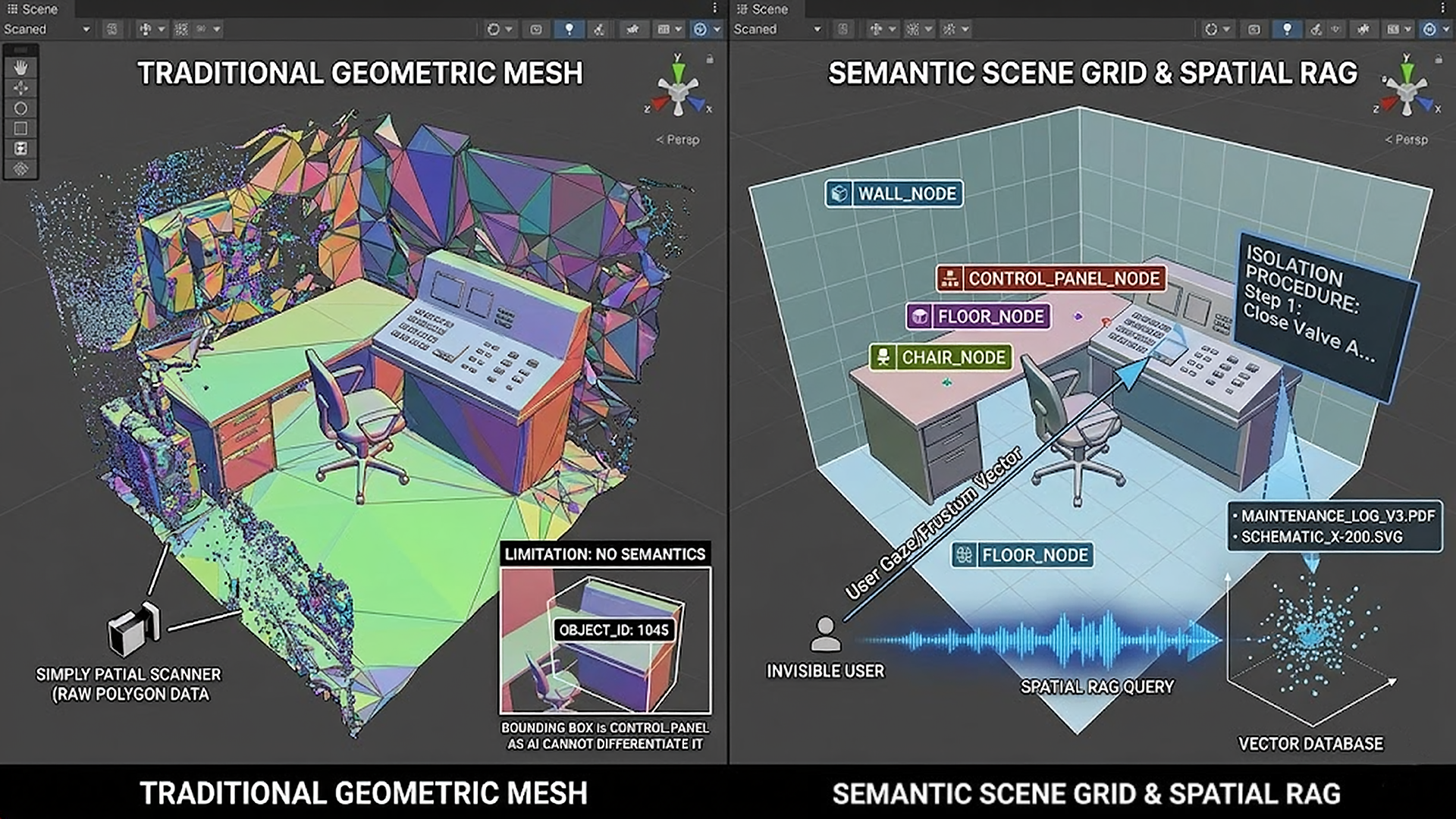
Figure 1. Raw geometric mesh versus context-aware semantic scene graph.
using System;
using System.Collections.Generic;
using UnityEngine;

public enum SemanticType {
    Unknown,
    Wall,
    Floor,
    Ceiling,
    ControlPanel,
    IndustrialValve,
    RoboticArm,
    SafetyEquipment
}

[System.Serializable]
public class SemanticNode {
    public string NodeId;
    public SemanticType Classification;
    public Vector3 Position;
    public Quaternion Rotation;
    public Vector3 BoundingBoxExtents;
    public string AssociatedMetadataURI;
    public List<string> ConnectedNodeIds;
    public float ConfidenceScore;
}
2. Implementing Spatial RAG: When Retrieval Begins with Gaze, Proximity, and Context
Traditional Retrieval-Augmented Generation starts with text. A user asks a question, the system searches a vector database, retrieves relevant content, and uses that knowledge to ground its response. Spatial RAG redefines the trigger itself. Here, the query does not begin with language — it begins with the environment.
A user’s gaze vector, hand interaction, spatial proximity, or focus on a specific object becomes the retrieval signal. The moment a technician looks toward a control panel, the system can identify the object semantically, collect contextual state such as object type and location, inspect its neighboring entities, and construct a context-rich query payload for retrieval.
That payload is then matched against enterprise knowledge sources such as schematics, SOPs, maintenance logs, incident histories, inspection records, and troubleshooting guides. The result is not a generic answer. It is a situated response, grounded in both the real-world environment and the organization’s knowledge base.
This is the true power of Spatial RAG: it collapses the distance between perception and reasoning. AI no longer waits for the user to translate context into a verbal prompt. It understands intent directly from spatial context and responds with operationally relevant intelligence — instructions, risk warnings, procedural overlays, or service insights attached precisely to the object in view.
For enterprise environments, this has major business implications. It shortens time-to-information, reduces search friction, improves precision of task execution, and minimizes dependency on manual recall in high-pressure operational scenarios. In essence, Spatial RAG turns location and context into a first-class retrieval interface.
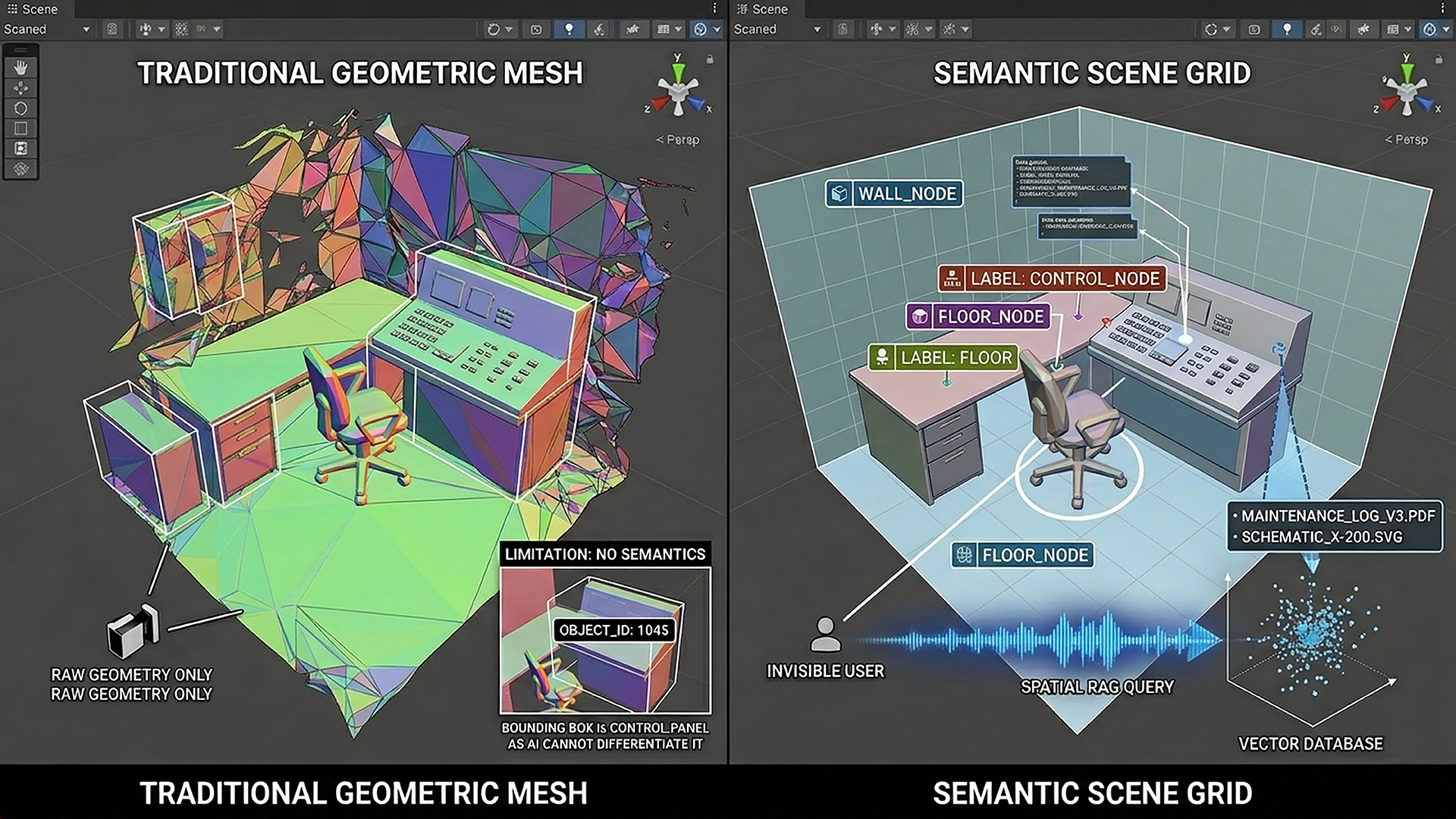
Figure 2. Spatial RAG query engine inside Unity.
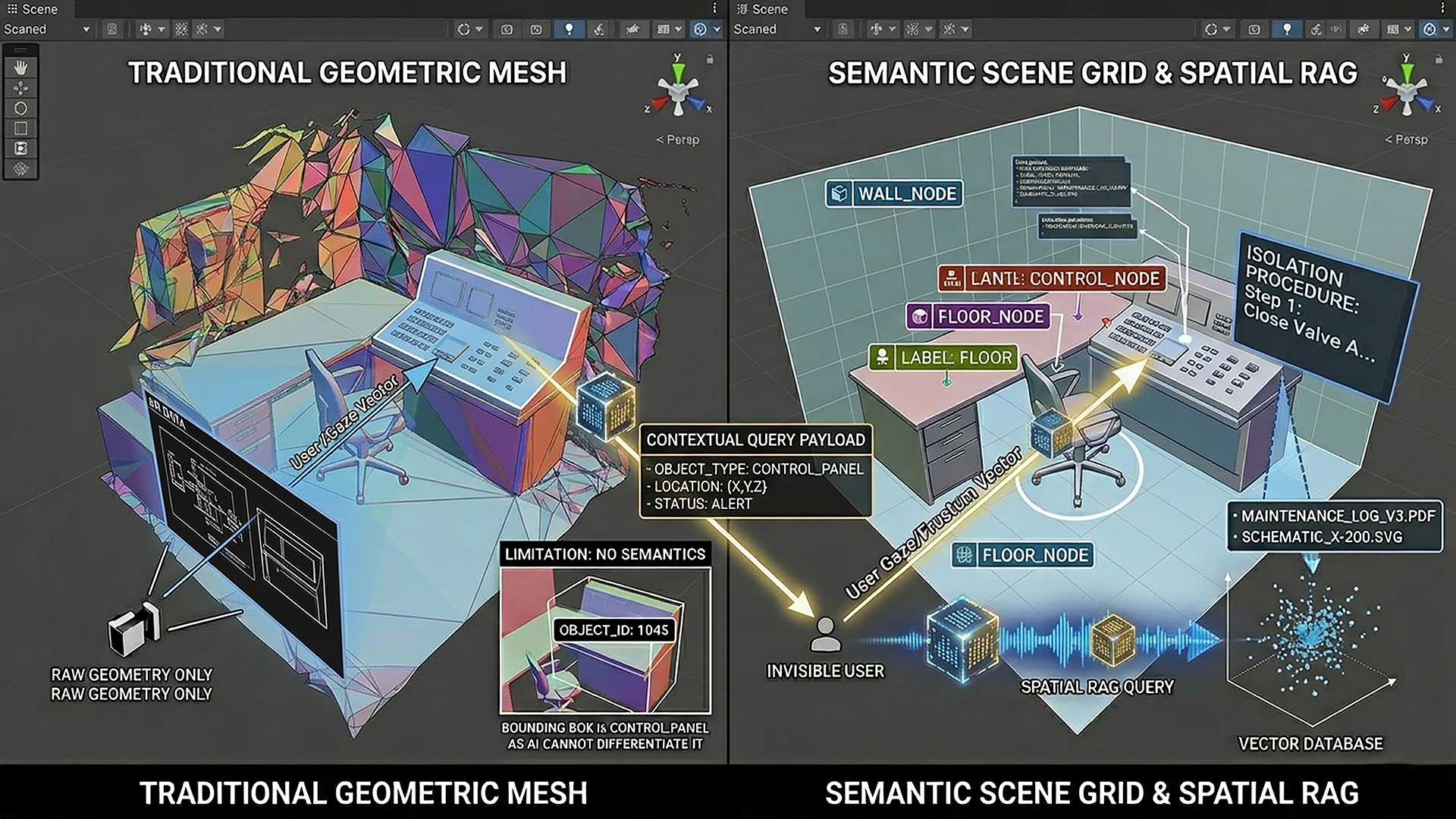
Figure 3. End-to-end data flow pipeline of a 3D Spatial RAG query.
3. Building the Cognitive Runtime Layer in Unity
Low-Latency High-Performance C# Optimization
To make Physical AI practical, the runtime engine must maintain a semantic abstraction of the environment that is lightweight, continuously queryable, and tightly connected to enterprise knowledge systems. Unity is especially well suited for this role because it can orchestrate object semantics, interaction logic, UI visualization, and AI-driven retrieval within a single real-time execution environment.
A semantic node model provides the right abstraction. Each node can carry classification type, transform properties, bounding extents, linked metadata URIs, connected node references, and confidence scores. This creates a reusable runtime pattern where the same architectural model can scale from factories and utilities to healthcare facilities, warehouses, training environments, and smart buildings.
The broader business value of this approach is strategic. It reduces the need for brittle, hard-coded application logic tied to specific objects or sites. Instead, organizations can build reusable cognitive frameworks in which intelligence is attached to semantic object classes and knowledge bindings. This makes solutions more portable across facilities, faster to adapt, and easier to govern as enterprise knowledge changes.
In other words, Unity stops being only a visualization engine. It becomes a runtime orchestrator for contextual reasoning — one capable of sensing space, interpreting objects, and invoking enterprise intelligence exactly where human attention is directed.
Why Low Latency Is a Business Requirement, Not Just an Engineering Goal
None of this intelligence matters if the runtime cannot keep pace with immersion. In XR systems, latency is not a secondary optimization issue — it is a core design constraint. Any semantic processing layer that overloads the main thread will immediately disrupt the rendering budget. And in immersive environments, degraded performance does more than create visual stutter; it erodes operator trust, reduces usability, and in many cases causes physical discomfort.
That is why high-performance execution architecture is essential to deployable Physical AI. Heavy operations such as scene topology evaluation, spatial proximity calculations, semantic grid updates, and telemetry-driven context refresh must be taken off the main thread and executed using optimized parallel pipelines.
Unity’s C# Job System, Burst compilation, and native memory structures make this possible. They allow spatial evaluation tasks to run in parallel, minimize garbage collection, and preserve frame stability below strict XR timing thresholds. This is not merely a technical best practice — it is the difference between a prototype that demonstrates possible intelligence and a production-grade system that sustains intelligence at scale.
using Unity.Burst;
using Unity.Collections;
using Unity.Jobs;

[BurstCompile(CompileSynchronously = true)]
public struct EvaluateSceneTopologyJob : IJobParallelFor
{
    [ReadOnly] public NativeArray<SpatialSceneNode> SceneNodes;
    [ReadOnly] public float3 UserReferencePosition;

    [WriteOnly] public NativeArray<float> ProximityMatrix;

    public void Execute(int index)
    {
        // Burst-compiled direct native memory evaluation bypassing the Main Thread completely
        float dynamicDistance = math.distance(SceneNodes[index].CenterBounds,
                                              UserReferencePosition);
        ProximityMatrix[index] = dynamicDistance;
    }
}
For enterprise leaders, the message is clear: real-time AI in spatial computing is only valuable if it remains seamless, reliable, and comfortable in continuous use. Performance discipline is therefore inseparable from business value. It protects adoption, improves user confidence, and ensures that intelligent overlays remain actionable in the exact moment they are needed.
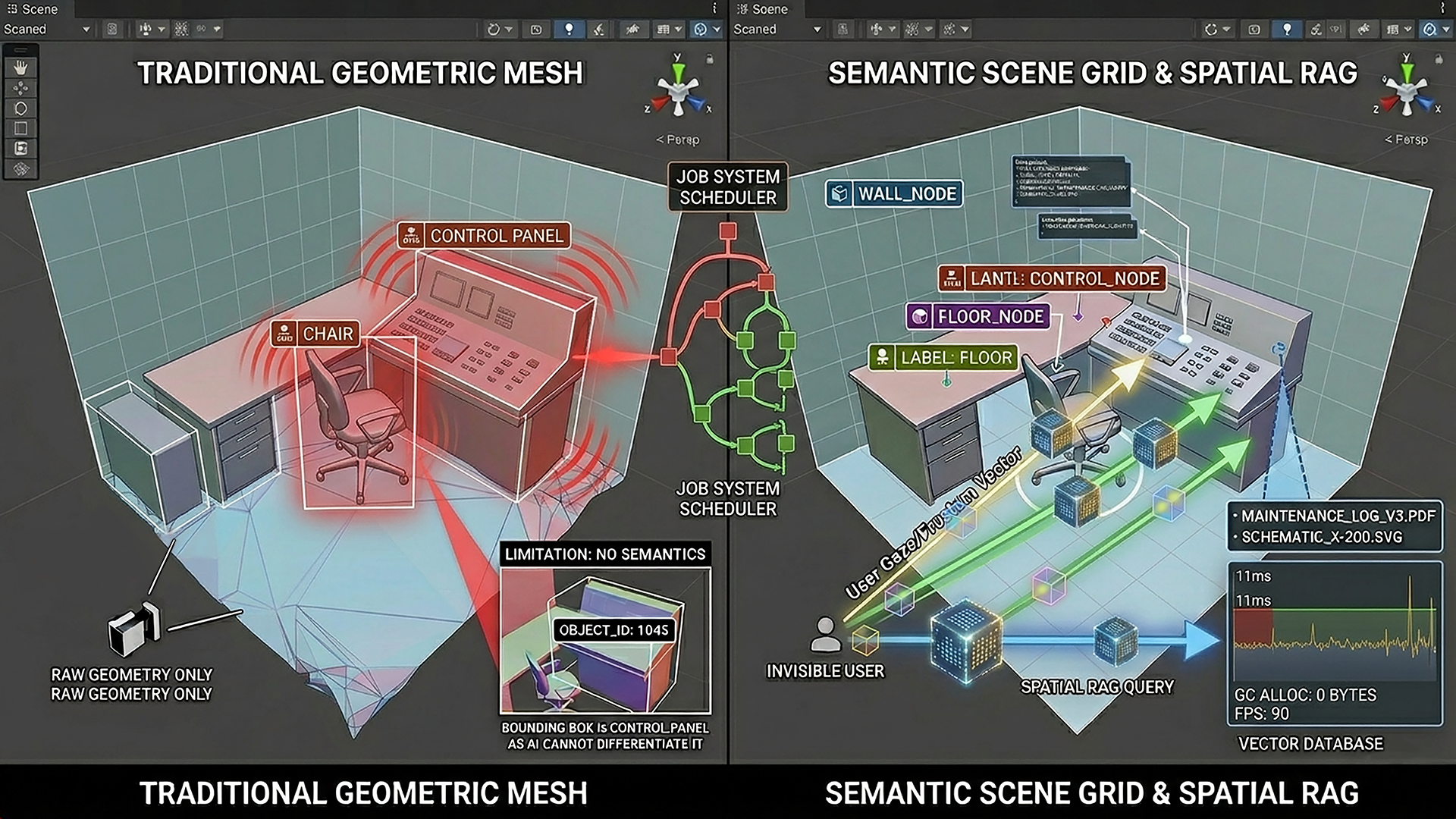
Figure 4. Main-thread bottleneck versus jobified low-latency pipeline.
4. From Spatial Experiences to Industrial Intelligence
The significance of this architectural pattern extends far beyond immersive visualization. Once semantic understanding and Spatial RAG are embedded into the runtime, spatial computing evolves from a medium of display into a medium of decision support. The environment itself becomes queryable. Machines, panels, rooms, safety zones, and workflows become nodes in a live operational knowledge system.
This changes how organizations think about frontline enablement. A control cabinet can surface the latest maintenance activity. A valve can display isolation instructions. A robotic cell can expose service dependencies and safety checks. An operating room asset can reveal sterilization status or procedure guidance. The real world becomes an intelligent surface for enterprise memory.
That transition carries measurable business impact. It can reduce downtime by accelerating issue diagnosis, improve first-time-right performance by contextualizing work instructions, shorten training cycles by embedding expertise into the environment, strengthen safety compliance through object-aware guidance, and preserve institutional knowledge by making it retrievable in context rather than buried in repositories.
This is the true promise of Physical AI: not merely overlaying information onto space, but operationalizing intelligence within space. It is the convergence of semantic perception, real-time optimization, AI retrieval, and enterprise knowledge architecture into one deployable system.
Conclusion: The Rise of the Queryable World
Beyond bounding boxes lies a more important frontier — a world in which physical space becomes semantically understood, enterprise-connected, and cognitively accessible. By treating the environment as a structured database rather than a raw mesh, we give AI agents the perceptual grounding required to operate safely, contextually, and intelligently in the real world.
Semantic Scene Graphs provide the structure. Spatial RAG provides the memory interface. High-performance runtime engineering provides the responsiveness required for live XR deployment. Together, they establish the architectural foundation for the next generation of Physical AI.
For enterprises, this is more than a technical innovation. It is a pathway to faster decisions, safer operations, more scalable expertise, and deeper human-machine collaboration. The future of spatial computing will not be defined only by how realistically it renders the world, but by how meaningfully it understands it.
The world beyond bounding boxes is not just more intelligent. It is more actionable, more query able, and more valuable to the business.