Introduction
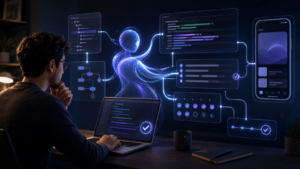
The way we build web applications is evolving rapidly. Traditional coding workflows often feel rigid and time consuming, but Vibe Coding introduces a new paradigm coding that feels intuitive, collaborative, and almost conversational. When combined with modern AI-powered coding assistants, developers can experience a seamless blend of creativity and productivity.
These AI tools integrate deeply with your IDE, understand your code context, and help you write, refactor, and debug faster than ever.
What is Vibe Coding?
Vibe Coding is about creating an environment where coding feels natural and enjoyable. It emphasizes:
- Flow State Development: Minimal distractions, maximum creativity.
- Conversational Coding: Interacting with AI as a coding partner.
- Rapid Prototyping: Turning ideas into functional components quickly.
Why AI-Powered Tools for Vibe Coding?
AI-powered development assistants bring:
- Context-Aware Suggestions: Understand your project structure.
- Smart Autocomplete: Goes beyond syntax to predict intent.
- AI-Powered Refactoring: Clean, optimized code in seconds.
- Integrated Chat: Ask questions, get explanations, and generate snippets without leaving your IDE.
Some Advanced Features
AI-Driven Code Reviews:
- AI can automatically review your code for best practices, security vulnerabilities, and style consistency.
- It highlights issues such as unused imports, redundant logic, and potential bugs.
- Provides contextual suggestions for improving readability and maintainability.
AI-Powered Optimization:
- Suggests performance improvements like reducing API calls, optimizing loops, and improving memory usage.
- Recommends scalable architecture patterns for large applications.
- Can even refactor code automatically to make it cleaner and more efficient.
AI-Powered Security Analysis:
- Automatically scans your code for security vulnerabilities like SQL injection, XSS, and insecure API calls.
- Suggests secure coding practices and patches for identified risks.
- Helps maintain compliance with industry security standards (e.g. OWASP).
Use Cases
- Rapid UI Development: Ask the AI assistant: “Generate a responsive navbar with Tailwind CSS and React.” Get a ready-to-use component instantly.
- Debugging Made Simple: Highlight the error and ask: “Why is this happening and how do I fix it?” The AI explains and suggests fixes.
- Code Reviews & Optimization: Suggest performance improvements, highlight unused imports, and recommend best practices.
- Learning While Building: Ask: “Explain how Next.js handles server-side rendering.” Get a concise explanation without leaving your coding flow.
Shift From Manual Coding to AI‑Accelerated Delivery:
Traditional Model:
- Developers write, debug, test, and refactor code manually.
- Productivity depends heavily on individual expertise and time.
AI Developer Model:
- AI generates large chunks of code, tests, docs, and architecture scaffolds.
- Developers act more like reviewers, curators, and systems thinkers.
- Coding becomes faster, more consistent, and more scalable.
Business Impact:
- 50–70% faster feature development cycles (based on internal industry case studies).
- Reduced dependency on niche skillsets-AI fills knowledge gaps.
- Accelerated time‑to‑market, improving competitiveness.
Benefits
- Speed: Build features in minutes, not hours.
- Quality: AI ensures clean, maintainable code.
- Collaboration: Feels like pair programming with an expert.
- Creativity: Focus on ideas, not boilerplate.
Final Thoughts
Vibe Coding empowered by modern AI tools isn’t just a trend-it’s the future of web development. By blending human creativity with AI intelligence, developers can achieve more in less time while enjoying the process. Whether you’re a seasoned architect or a beginner, this approach can transform your workflow.