Introduction:
As immersive technologies like AR/VR/XR gain traction, avatars and 3D models have become central to digital experiences. However, ensuring these assets comply with licensing agreements, encryption protocols, and security standards is critical—not just for legal compliance but also for safeguarding intellectual property and user trust. This is where a robust QA pipeline comes into play.
Why These Validations Matter
Licensing Compliance: Many 3D assets are sourced from external libraries or marketplaces. Misuse of licensed content can lead to legal disputes and reputational damage.
Encryption & Security: Avatars often carry sensitive user data or proprietary designs. Without encryption and integrity checks, these assets are vulnerable to theft or tampering.
Ethical & Boundary Checks: Beyond technical compliance, avatars must respect cultural, ethical, and privacy norms.
QA Pipeline Integration: Step-by-Step
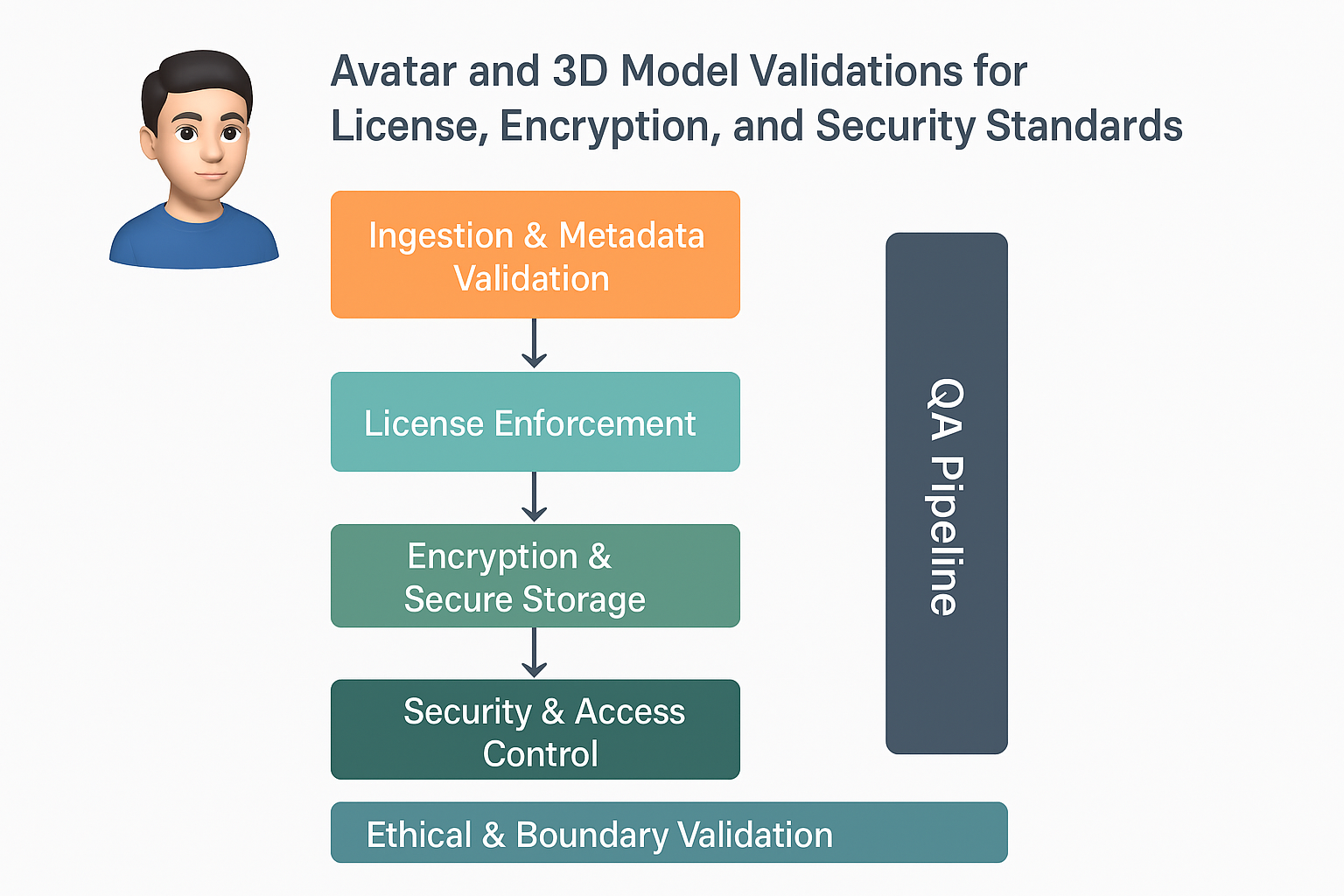
1. Ingestion & Metadata Validation
When a 3D model or avatar enters the QA pipeline, the first step is metadata analysis. This ensures that the asset is properly documented and compliant before any processing begins.
Key Actions:
License Type Verification: Check if the asset is under Creative Commons, proprietary, or royalty-free license.
Usage Rights & Expiration: Confirm that the asset can be used for the intended purpose and is not expired.
Automated Metadata Parsing: Scripts analyze GLTF, FBX, or OBJ files for embedded license tags, creator details, and version history. Why It Matters: Prevents unauthorized use and ensures legal compliance from the start.
2. License Enforcement
After metadata validation, enforce Digital Rights Management (DRM) policies to protect intellectual property.
Key Actions:
Duplication Control: Ensure assets cannot be copied or redistributed without authorization.
Watermarking & Fingerprinting: Embed invisible identifiers in the 3D model to track ownership and usage. Why It Matters: Protects against piracy and maintains asset integrity across platforms.
3. Encryption & Secure Storage
Before moving assets to staging or production environments, apply strong encryption and secure storage practices.
Key Actions:
AES-256 Encryption: Encrypt files at rest to prevent unauthorized access.
TLS/HTTPS Transmission: Secure data during transfer between systems.
Integrity Checks: Use SHA-256 hashing to verify that files remain unchanged.
Key Management: Rotate encryption keys regularly and store them in secure vaults (e.g., Azure Key Vault, AWS KMS). Why It Matters: Protects sensitive data and prevents tampering during storage and transmission.
4. Security & Access Control
Implement strict access policies to ensure only authorized personnel can interact with assets.
Key Actions:
Role-Based Access Control (RBAC): Define roles for viewing, editing, and exporting assets.
API Security: Validate endpoints for avatar rendering using OAuth 2.0 and JWT tokens.
Audit Logging: Track all access and changes for compliance reporting. Why It Matters: Reduces risk of insider threats and unauthorized modifications.
5. Ethical & Boundary Validation
Beyond technical checks, validate avatars for cultural, ethical, and privacy compliance.
Key Actions:
Content Screening: Detect offensive or culturally inappropriate designs using AI-based filters.
Privacy Compliance: Ensure avatars do not replicate real-world likeness without consent.
Inclusivity Checks: Validate that avatars meet diversity and accessibility standards. Why It Matters: Builds trust and ensures responsible use of immersive technologies.
Automation in QA
CI/CD Integration: Add validation scripts into build pipelines.
Compliance Dashboards: QA teams can monitor license status, encryption health, and security posture in real time.
Audit Trails: Maintain logs for every validation step for regulatory compliance.
Benefits
Risk Mitigation: Avoid legal and security breaches.
Trust & Transparency: Users and partners gain confidence in asset integrity.
Scalability: Automated checks allow rapid onboarding of new assets without manual overhead.
Conclusion
Embedding license, encryption, and security validations into the QA pipeline ensures avatars and 3D models are not only visually compelling but also legally compliant, secure, and ethically sound. As virtual experiences scale, this approach becomes a cornerstone for responsible innovation, protecting both organizations and end-users in the evolving digital landscape.