 For decades, enterprise software delivery has relied on a simple equation: greater business demand requires greater engineering capacity. Organizations seeking to accelerate transformation have traditionally responded by scaling engineering capabilities, expanding delivery teams, growing T&M outsourcing partnerships, and adapting productivity tools.
Yet despite these efforts, technology leaders continue to face familiar challenges. Legacy systems accumulate technical debt. Complex technology estates become increasingly difficult to maintain. Release cycles grow more demanding. Business expectations continue to rise. At the same time, organizations are under pressure to innovate faster while maintaining reliability, security, and regulatory compliance.
Today, that equation is beginning to change. As Artificial Intelligence evolves from an assistive capability to an autonomous one, enterprises now have an opportunity to rethink: how software engineering work is executed and scaled, which is one of the most persistent constraints in software delivery.
The emergence of autonomous AI agents’ (autonomous AI Engineer) purpose- built for software engineering represents a significant shift in how software is created, maintained, and evolved. Rather than merely assisting developers with code suggestions, these AI agents help teams understand requirements plan implementation approaches, execute engineering tasks across the software development lifecycle. This includes identifying user stories, creating product backlogs and epics, enabling sprint and implementation planning, writ and refactor code, perform testing- including functional, performance and end-to-end (E2E) testing, remediate defects, support software maintenance and migrations.
This evolution marks a transition from AI-assisted development to AI autonomous engineering. Much like cloud computing transformed infrastructure consumption and DevOps transformed software delivery, AI Engineer have the potential to redefine how engineering organizations operate and deliver value.
Recognizing this opportunity, Infosys has collaborated with Cognition, creator of Devin, an AI Engineering platform designed to autonomously execute software engineering tasks. Combined with the governance, orchestration, security, and enterprise-context capabilities of Infosys Topaz AI Fabric, organizations can move beyond isolated AI pilots and establish an enterprise-ready framework for autonomous engineering at scale.
However, the significance of autonomous AI Engineers extends far beyond coding productivity.
The real opportunity lies in enabling a new operating model for enterprise engineering
Rethinking How Software Gets Built
For years, engineering leaders have viewed software delivery through the lens of resource availability. More projects require more developers. More applications required larger support teams. More transformation programs demanded larger budgets and longer timelines. This resource-driven model has also shaped how organizations think about time-to-market — with speed of delivery constrained by the pace at which teams could be built and scaled. Autonomous AI engineering on the other hand is able break this constraint and enable organizations to deliver new products and business capabilities faster, directly fueling business innovation
AI Engineers introduce a fundamentally different model.
By autonomously executing repetitive, time-intensive engineering activities, they allow human engineers to focus on higher-value responsibilities such as architecture, innovation, governance, customer experience, and business strategy. This enables organizations to deliver more outcomes while maintaining focus on what matters most: creating business value.
The consequences are particularly significant in industries where technology complexity has historically outpaced available resources, such as B2B and B2C business, Supply Chains Partners, Banking, Insurance, Capital Markets, Telecom, Manufacturing, Retail, CPG, Energy & Utilities, Content Delivery, Technology & Digital platforms, and more.
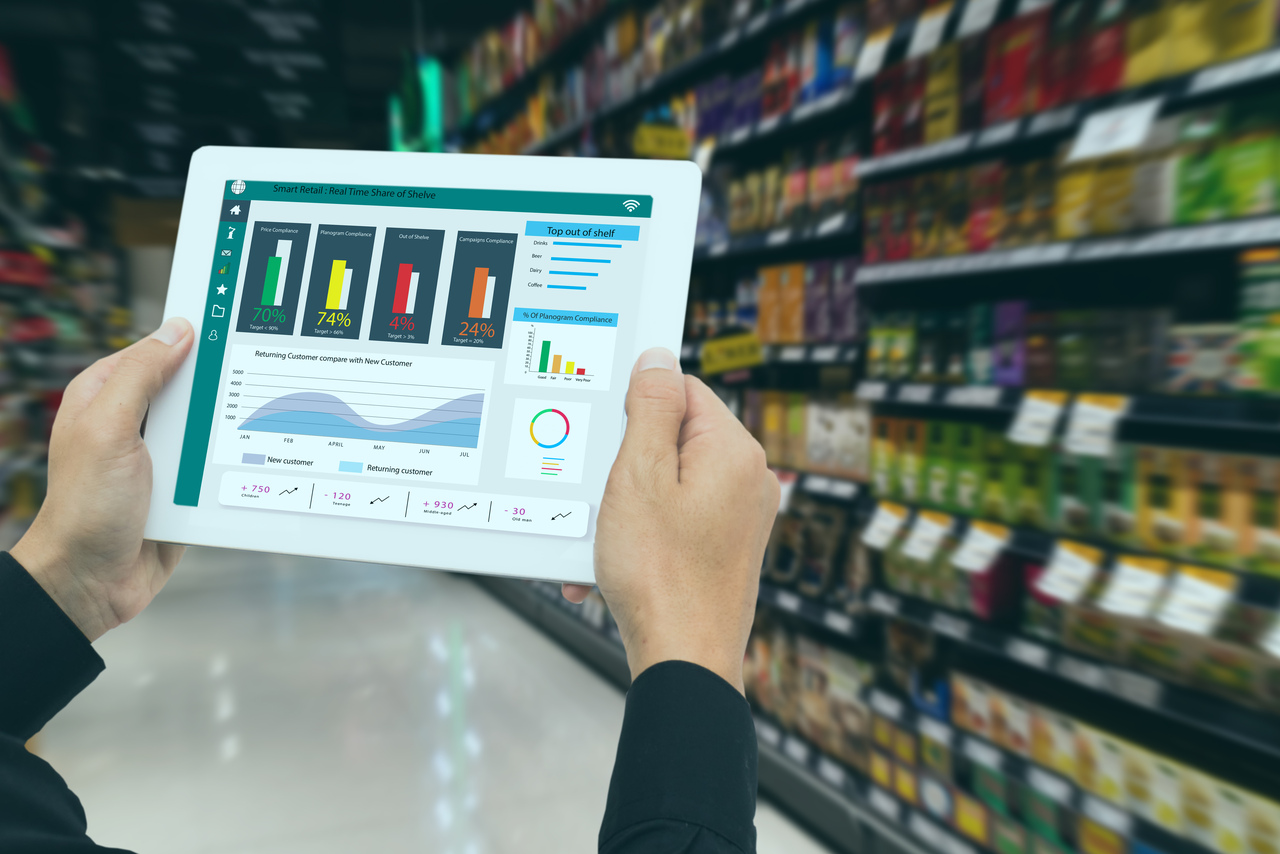
Consider these sample use cases, whether preparing retailers for peak shopping events, helping Consumer Packaged Goods (CPG) companies manage increasingly complex pricing and promotion ecosystems, or strengthening operational reliability across logistics partner networks, in each of these cases autonomous AI Engineer can serve as a continuous layer of engineering intelligence across the enterprise. By proactively validating business logic, integration, data flows, and customer-facing experiences, they help organizations reduce operational risk, improve reliability, and embrace change with greater confidence.
Across these industries, the goal is not merely to deliver software faster, but to create engineering organizations that can absorb change continuously without sacrificing quality, governance, or business performance.
Technology Transformation Without the Historical Trade-Offs
Few enterprise priorities are as important, or as challenging, as transforming legacy technology estates.
Organizations understand the need to reduce technical debt, modernize core systems, and adopt more agile architectures. Yet these initiatives have traditionally demanded difficult trade-offs: Move too slowly, and innovation stalls. Move too aggressively, and operational risks increase.
This challenge is especially pronounced in industries such as Banking, Financial Services, Insurance, Telecommunications, and Manufacturing, where core systems support critical business processes, customer experiences, and regulatory obligations.
Historically, large-scale transformation programs demanded extensive planning, manual analysis, broad testing efforts, and lengthy stabilization cycles. As a result, organizations often struggled to balance speed, cost, risk, and quality.
Autonomous AI Engineers are helping redefine that equation.
By autonomously analyzing legacy code bases, generating transformation pathways, creating and executing tests, identifying defects, validating dependencies, and supporting remediation efforts, they can accelerate technology evolution while improving confidence in delivery outcomes.
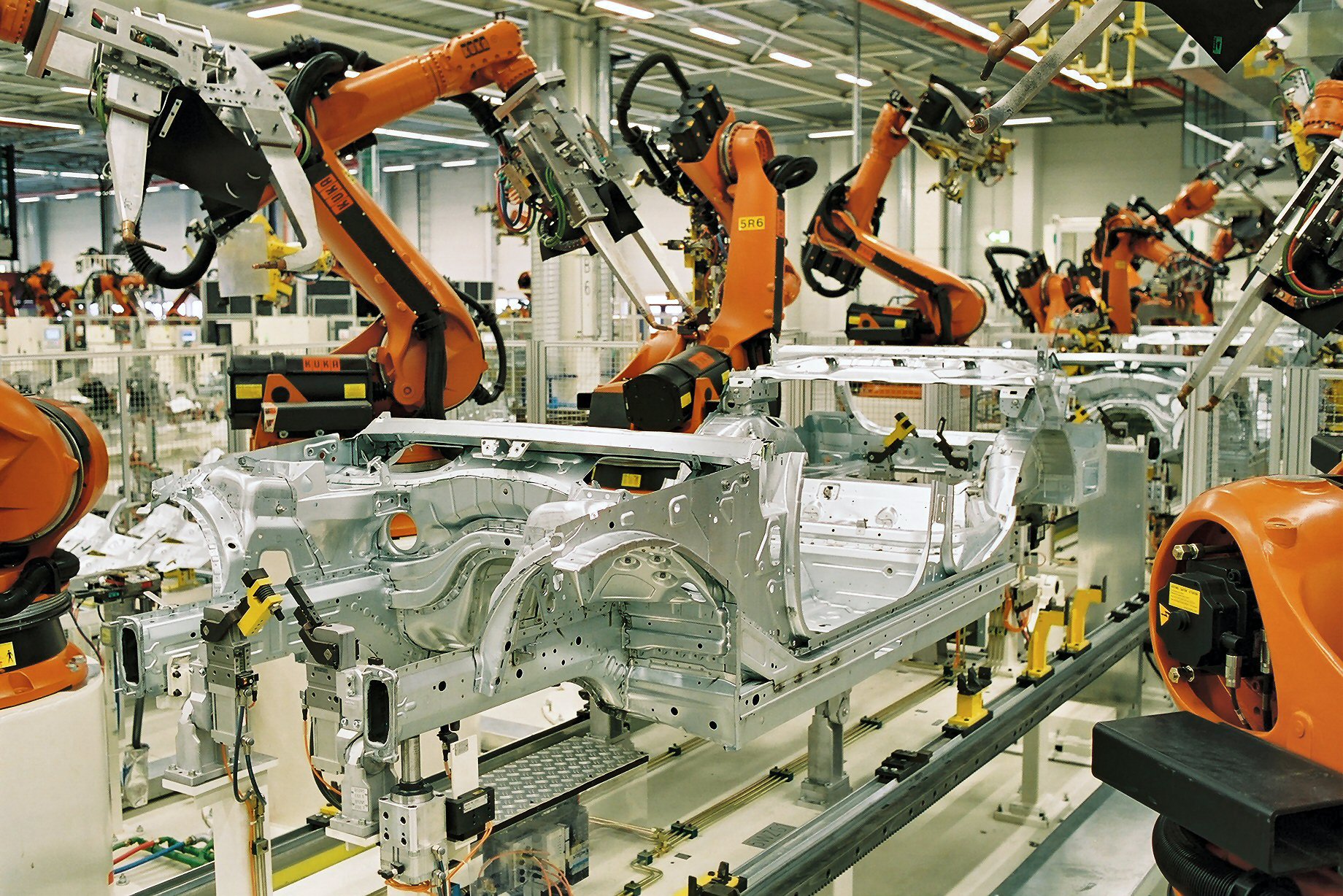
For financial institutions, this can accelerate mainframe transformation, payments modernization, and core banking evolution while still maintaining governance and auditability. For insurance providers, Autonomous AI Engineer can support policy administration upgrades and regulatory change implementation. Telecommunications organizations can improve the reliability of OSS/BSS transformation initiatives, while manufacturers can evolve ERP, MES (Manufacturing Execution Systems), and supply chain platforms without compromising operational continuity.
The outcome is not simply faster transformation. It is transformation delivered with greater predictability, stronger governance, and reduced operational risk.
Moving Beyond Automation
The conversation around enterprise AI frequently centers on automation.
Yet automation and autonomous engineering are not the same thing.
Automation focuses on predefined tasks. Autonomous engineering focuses on outcomes.
An automation tool may generate code, execute a script, or run a test case. An autonomous AI Engineer can interpret objectives, determine approaches, coordinate activities across multiple systems, identify issues, adapt to changing conditions, and pursue desired outcomes with minimal human intervention.
This distinction represents a significant shift in enterprise technology operations.
The next wave of engineering transformation will not be defined by organizations automating isolated activities. It will be defined by organizations building environments where humans and AI collaborate to execute increasingly complex engineering work.
The competitive advantage will belong not to those with the largest engineering workforces, but to those that most effectively orchestrate human expertise and autonomous execution.
The Rise of the Hybrid Engineering Workforce
Much of the public discourse surrounding AI is framed as a debate between humans and machines.
The reality is likely to be far more collaborative.
Human engineers continue to bring capabilities that remain uniquely valuable: architectural judgment, creativity, contextual understanding, stakeholder alignment, governance, ethical oversight, and deep domain expertise.
Autonomous AI Engineer complements these strengths by providing scalable execution across development, testing, maintenance, transformation, and operations.
Together, they create a hybrid workforce model that combines human ingenuity with autonomous execution.
In this model, engineering organizations spend less time navigating resource constraints and more time delivering innovation, customer value, and business growth. Teams can focus their energy on solving strategic challenges while autonomous AI Engineer absorb much of the repetitive, execution-intensive work that often slows transformation efforts.
This is why the Infosys-Cognition collaboration is about far more than adopting a new technology platform. It reflects a broader industry shift toward autonomous engineering, where human talent, AI Engineers, and agentic platforms work together within a governed enterprise framework.
The Next Decade of Engineering
Every major technology wave has reshaped the way enterprises operate.
Cloud transformed infrastructure. Agile transformed project delivery. DevOps transformed software release cycles. Generative AI transformed how knowledge work is performed.
Autonomous AI Engineer can transform how engineering work itself is executed and scaled.
The organizations that lead the next decade will not necessarily be those with the largest developer teams. Nor will they simply be those that deploy the most AI tools. They will be the organizations that successfully build hybrid engineering ecosystems where human expertise and autonomous execution operate as a unified force, enabling continuous technology evolution, faster innovation, stronger operational performance, and sustainable competitive advantage.
The future of software engineering is not human versus AI.
It is human ingenuity amplified by autonomous digital teammates.