Vision Language Action Models
Artificial intelligence has made tremendous advances in the last few years. Today’s machines can recognize images, translate languages, generate text, write code, and analyze data. However, most of these systems are still primarily digital-based.
Real autonomy requires something more powerful. A machine must not only understand information—it must also interact with the physical world.
In order to achieve this level of autonomy, three capabilities must work together:
- the capability to recognize and interpret the visual environment (vision)
- the capability to understand Instructions and context (language)
- the capability to decide and perform actions (action)
This is exactly what Vision-Language-Action models (also called VLA models) are designed to accomplish.
They represent an important evolution in artificial intelligence: systems that go beyond analysis and begin to translate perception and reasoning into real-world actions.
In many ways, Vision-Language-Action models are becoming the cognitive engine behind autonomous machines.
The Three Capabilities That Define Vision-Language-Action Models
A vision-language-action model comprises three distinct, yet interconnected capabilities.
Vision: Understanding the Physical World
Vision enables machines to interpret images, video streams, and sensor inputs.
Rather than simply detecting pixels, Modern AI vision systems can Identify Objects, determine spatial relationships between them, and interpret dynamic environments.
For example, a robot equipped with vision capabilities may understand that:
- a cup is on the table
- a laptop is beside the cup
- a person is reaching toward the laptop
This type of understanding allows machines to perceive the environment in a meaningful way.
Without vision, machines operate blindly. With vision, they gain situational awareness.
Language: Understanding Human Intent
Language enables machines to interpret Instructions expressed in natural human communication.
Humans rarely communicate with rigid commands; rather, humans speak naturally.
For example:
- “move the box closer to the door.”
- “put the empty bottle in the recycling bin.”
- “bring me the tool next to the machine.”
A language-capable system will interpret these Instructions and convert them into structured goals.
This is an important step because machines must translate human intent into executable plans.
Language provides the interface between human reasoning and machine behavior.
Action: Executing Decisions
The final component is action. Once a system Understands what it sees and what it has been asked to do, it must generate the actions required to complete the task.
Action might involve:
- moving a robotic arm
- Navigating through space
- grasping an object
- adjusting machine settings
- triggering digital workflows
Action transforms intelligence into physical outcomes. Without action, AI remains an observer. With action, AI becomes an actor in the environment.
Why Vision-Language-Action Models Represent a Breakthrough
Previous robotics systems were typically developed using separate modules.
One system detected Objects. Another system was responsible for interpreting Instructions. A third system controlled movement.
Although each module functioned well in a controlled environment, they struggled to adapt to unpredictable situations.
The real-world introduces constant variation:
- lighting conditions change
- Objects move unexpectedly
- New obstacles come
- Instructions vary
- environments evolve
Vision-Language-Action models seek to address this challenge by learning the connection between perception, reasoning and behavior within a single architecture.
Rather than manually coding thousands of rules, the system learns patterns that link observation and action.
For example, if the system sees a cup and hears the instruction “place it in the sink,” it learns the relationship between the object, the instruction, and the required motion.
This approach makes machines more adaptable and able to handle complex environments.
Simple Examples of Vision–Language–Action in Practice
Understanding Vision-Language-Action models becomes easier when we consider everyday scenarios.
Example 1: Warehouse Automation
In a modern warehouse, a robot may receive an instruction such as:
“pick up the blue package from shelf number 3 and place it on the conveyor belt.”
A Vision-Language-Action system would:
- Scan the shelves using cameras
- Identify the blue package
- Calculate how to grasp it
- Move the robotic arm
- Place the package onto the conveyor
All of this happens through the integration of vision, language understanding, and action planning.
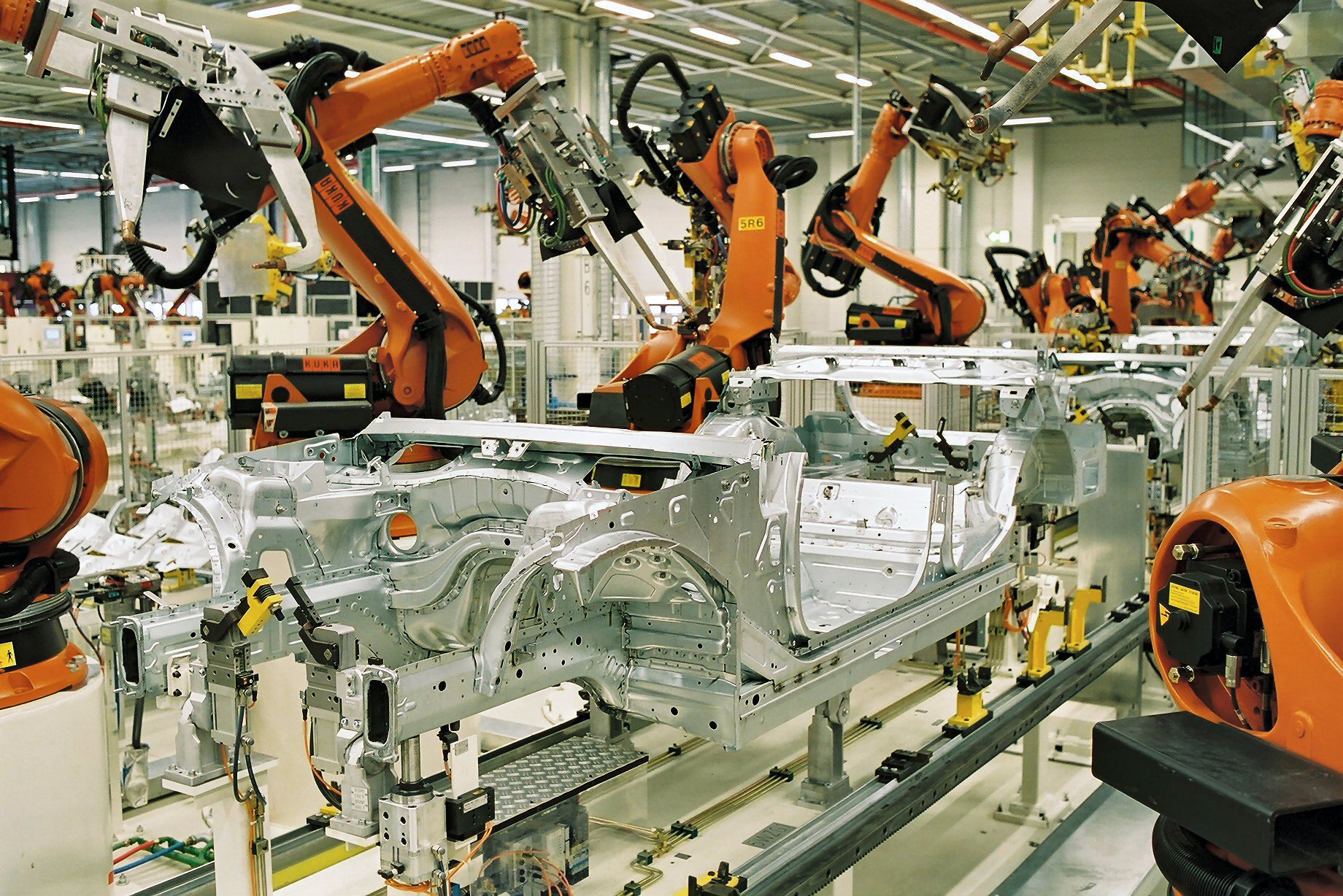
Example 2: Industrial Manufacturing
In a factory, machines often need to perform tasks that depend on real-time conditions.
For example, a machine may be instructed to:
“remove defective components from the assembly line.”
The system must visually inspect products, Identify defects, and then take corrective action.
A vision-language-action model can connect these steps automatically.
Example 3: Household Robots
Suppose a home assistant robot receives the following instruction:
“bring me the book from the table.”
The robot must:
- Identify the correct book
- navigate towards the table
- pick up the book safely
- deliver it to the person
This appears to be a simple task, but it requires all three capabilities working together.
The Rise of Embodied Intelligence
Vision-Language-Action models are closely related to a concept known as embodied intelligence.
Embodied intelligence refers to ai systems that interact with the physical world through sensors and actuators.
Unlike purely digital ai systems, embodied systems must manage uncertainty, motion and constraints involving the real world.
For example:
- a robot arm must modify its grip if an object shifts
- a delivery robot must avoid obstacles
These challenges require continuous feedback between perception and action.
Vision-Language-Action models provide a framework for managing this interaction.
Applications of Vision-Language-Action Models to Enterprise Organizations
The impact of Vision-Language-Action models extends far beyond research laboratories.
Many industries are beginning to explore their potential.
Manufacturing
Factories increasingly rely on intelligent automation. Vision-Language-Action systems can enable machines that adapt to new tasks without substantial reprogramming.
Logistics
Warehouses and distribution centers can use robots that can sort items and fulfill orders based on complexity.
Healthcare
Medical robotics could benefit from systems that can interpret Instructions while analyzing visual data.
Agriculture
Autonomous machines can monitor crops, Identify plant conditions and perform targeted actions like harvesting or treatment.
Smart Infrastructure
Inspection robots can analyze physical assets and perform maintenance tasks in difficult-to-navigate areas.
In each of these cases, the ability to combine perception, reasoning and action becomes a significant advantage.
From AI That Understands to AI That Acts
For over a decade, the main focus of artificial intelligence was to understand information.
Now, the frontier is shifting to systems that translate intelligence into action.
This represents a major advance in the evolution of intelligent machines.
Early ai systems focused on calculation.
Modern AI systems focus on reasoning.
The next generation will focus on autonomy.
Vision-language-action models are at the center of this transformation.
They enable machines to relate what they observe with what they do.
The Future of Autonomous Machines
As AI systems continue to improve, the combination of perception, language and action will become even more important.
Future machines will need to:
- understand complex environments
- interpret human Instructions
- make real-time Decisions
- Execute actions securely and reliably
Vision-Language-Action models offer a promising architecture for achieving this level of autonomy.
They represent a major advance toward machines that are not only intelligent but also able to operate meaningfully in the real world.
Conclusion
Vision-language-action models mark an important transition in artificial intelligence.
They unite three critical capabilities (vision, language and action) into a unified system that enables machines to move from observation to execution.
By combining perception, reasoning and behavior, Vision-Language-Action models allow the development of autonomous machines that can operate in complex environments and interact naturally with humans.
As industries adopt intelligent automation at an increasing rate, it is likely that these systems will play a central role in the next generation of robotics and autonomous technologies.
Therefore, Vision-Language-Action models are not merely another AI architecture.
They are becoming the cognitive engine behind autonomous machines.
Frequently Asked Questions (FAQ)
What is a Vision Language Action model?
A Vision Language Action model is an artificial intelligence system that integrates visual perception, language understanding, and decision-making to enable machines to interpret environments, understand instructions, and perform actions in the real world.
How do Vision Language Action models work?
Vision Language Action models process visual inputs from cameras or sensors, interpret human instructions through natural language understanding, and generate actions such as moving robots, manipulating objects, or executing tasks.
Why are Vision Language Action models important?
They allow machines to move beyond simple recognition or analysis and instead interact with real environments. This makes them critical for robotics, autonomous machines, and intelligent automation.
What is the difference between large language models and Vision Language Action models?
Large language models focus on generating and understanding text. Vision Language Action models extend this capability by combining visual perception and action planning, allowing machines to perform tasks in physical environments.
Where are Vision Language Action models used?
These models are used in robotics, manufacturing automation, logistics systems, healthcare robotics, agricultural machines, and intelligent infrastructure inspection systems.
Are Vision Language Action models part of embodied AI?
Yes. Vision Language Action models are often used to power embodied AI systems that interact with the physical world through sensors, actuators, and autonomous decision-making.
Why are Vision Language Action models important for autonomous machines?
Autonomous machines must understand their environment, interpret goals, and act safely. Vision Language Action models provide the architecture that connects perception, reasoning, and action.
Glossary
Vision Language Action Models
Artificial intelligence systems that integrate visual perception, language understanding, and action planning to allow machines to interpret environments and perform tasks autonomously.
Autonomous Machines
Machines capable of performing tasks independently using artificial intelligence, sensors, and automated decision-making.
Embodied Intelligence
A form of artificial intelligence where machines interact with the physical world through sensors and actuators, enabling them to perceive, reason, and act.
Robotic Perception
The ability of robots to interpret visual and sensor data to understand their surroundings.
Human–Machine Interaction
The communication and collaboration between humans and intelligent machines through natural interfaces such as language and gestures.
Autonomous Robotics
Robotics systems that can operate without constant human control by using artificial intelligence and environmental awareness.