Artificial intelligence is entering a completely new paradigm.
Until recently, nearly all people came into contact with artificial intelligence via a screen. They viewed it in chatbots, co-pilots, recommender engines, search devices, and creation platforms. That shift was significant. It changed how individuals write, investigate, code, design, and make decisions. However, the majority of that experience was still digital.
AI could read, summarize, generate, categorize, and forecast. AI can aid people in working more quickly and automating numerous types of knowledge-based work. Nonetheless, the vast majority of AI existed outside of the physical realm.
That isolation is slowly vanishing.
There exists a brand-new wave of innovation that is extending the boundaries of AI beyond the confines of screens and into devices that are able to perceive their environment, comprehend what is transpiring in their environment, and respond within real-life settings. This represents the beginnings of the relevance of humanoid robots, autonomous devices, industrial systems, warehouse robots, and service robotics in a new way.
At the heart of this transition is a developing concept that is growing in significance – Physical AI.
Physical AI provides machines with the capacity to perform intelligently in the real world. It enables machines to perceive their environment, interpret context, make decisions, and act in a manner that is useful, safe, and adaptable. If generative AI provided machines with the capability to interact with language and content, physical AI is providing them with the capability to interact with reality itself.
Therefore, this is relevant. Physical AI is not merely another label within the AI development cycle. It is becoming the foundation for a new generation of automation.
Digital Intelligence to Physical Intelligence
Nearly all current enterprise AI systems function on digital inputs. Documents, dashboards, transactions, code, emails, audio, images, and workflow data are processed by them. These systems assist organizations to identify patterns, automate tasks, and support decisions.
However, the physical world is far less predictable.
Things do not exist where they should be. Light varies. Surfaces vary. People move unpredictably. Environments are dynamic, noisy, and often chaotic. In these kinds of settings, machines cannot depend on clean inputs or predetermined conditions. They have to respond in real-time, and they have to do so reliably.
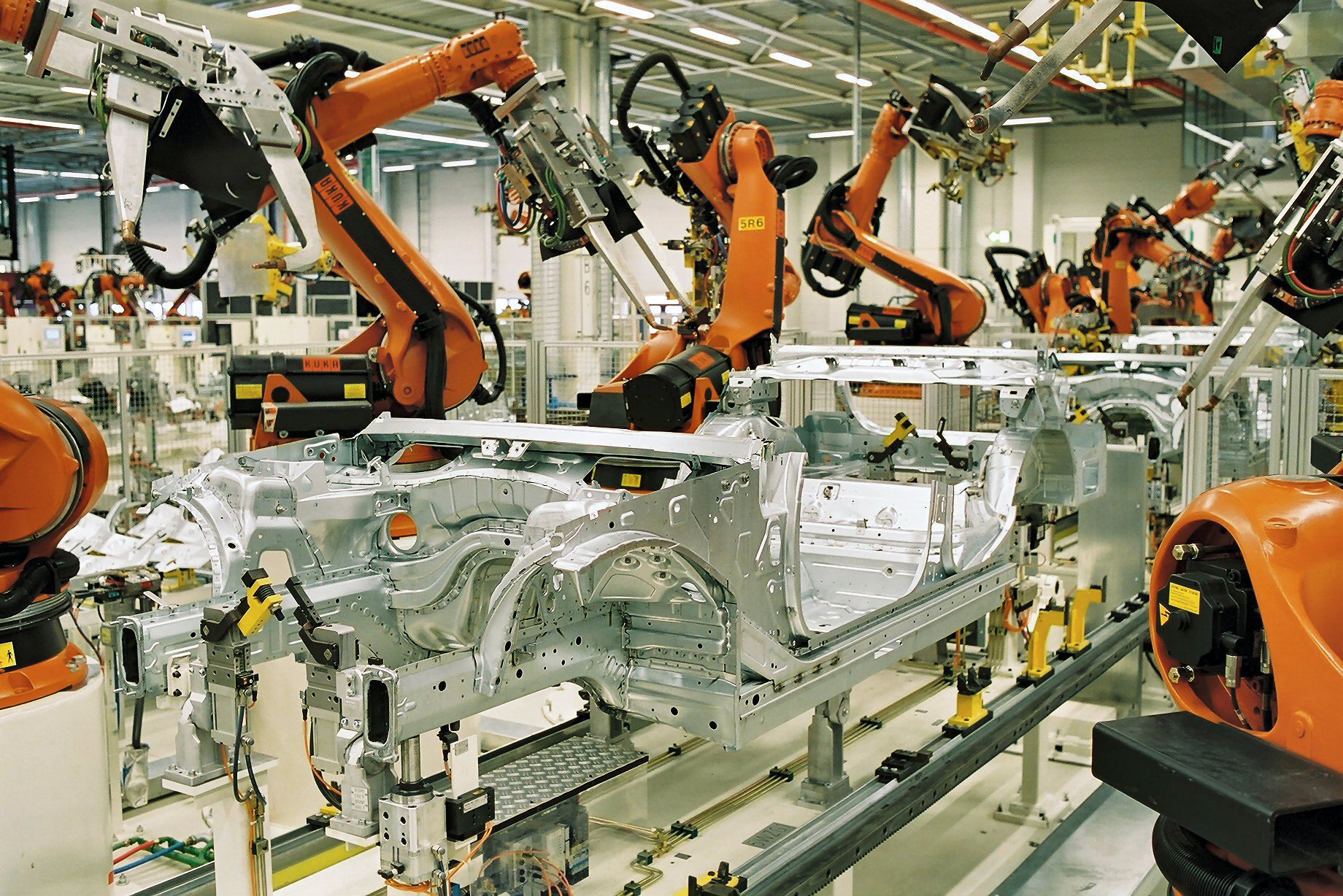
A factory floor behaves unlike a chatbot user interface. A warehouse behaves unlike a spreadsheet. A humanoid robot cannot simply produce a plausible response and assume the best. It must recognize the environment accurately and execute with precision.
That represents the true distinction.
An error generated by a digital assistant creates inconvenience. An incorrect action created by a robot generates risk.
And that creates a significantly different challenge for physical AI compared to traditional software-based AI.
What Does Physical AI Truly Represent?
At its core, physical AI combines perception, reasoning, planning, control, and adaptation in a real-world device.
In simpler terms, it enables a machine to accomplish five fundamental functions.
-
Perceive the environment
A robot employs cameras, sensors, force feedback, and other inputs to understand what is occurring in the environment surrounding it.
-
Understand the situation
It recognizes objects, locations, states, and tasks. It has to make sense of what it observes, not only identify shapes or motion.
-
Determine the next course of action
It determines the appropriate action to take based on objectives, guidelines, security limitations, and environmental variables.
-
Execute in the real world
It moves, seizes, travels, adjusts, positions, or responds physically.
-
Adapt over time
It adapts based on information, simulations, reactions, and repeated experiences.
That seems straightforward when expressed this way. In reality, it is very challenging.
For example, even a basic activity like picking up a box entails significantly more than merely moving a robotic arm. The machine has to identify the box, estimate its location, establish the correct method of gripping the box, assess if it is fragile or unstable, and travel to the box without colliding with something nearby.
What appears effortless to a human typically demands considerable intelligence from the machine.
That is why the intelligence layer is so critical.
Why Do Humanoid Robots Rely Upon Physical AI?
Humanoid robots are receiving so much attention since human environments are already constructed for human bodies. Our production facilities, distribution centers, workplaces, hospitals, shops, and homes were established to accommodate human movement and operation.
Shelves, stairs, doors, equipment, handles, containers, buttons, and workstations were designed to facilitate human use.
That offers humanoid robots a clear advantage. In theory, they can function in pre-existing areas without requiring the environment to be redeveloped from scratch.
However, the physical form alone addresses only a portion of the challenges.
A humanoid robot devoid of genuine intelligence is merely an expensive item of machinery. The actual worth of the device emerges when the machine is capable of comprehending context, responding to variations, and acting flexibly.
Consider a few examples:
- A package sorting robot in a warehouse may have to recognize various packages and separate them properly.
• A robot in a manufacturing facility may have to transfer products, examine elements, or provide assistance to employees in a secure manner.
• A humanoid robot used in medical care may have to deliver goods or assist with routine internal activities.
• An inspection robot used in hazardous environments may have to assess spaces that are inaccessible or hazardous to humans.
In each of these instances, the problem is not merely movement. The problem is contextually aware and meaningful movement.
That is precisely where physical AI enters.
Components of the Physical AI Stack
One useful way to think about physical AI is as an intelligence stack.
Perception
This is the machine’s ability to sense and interpret the environment. It includes vision, touch, depth sensing, sound, motion detection, and spatial awareness.
Understanding of the world
The machine needs an internal model of what is around it. It must understand not just that it sees an object, but what that object is, where it is, and why it matters in context.
Reasoning and planning
The system must translate the objective into actions. If it receives a command such as “select the red container from the second shelf,” it must transform language into a series of real-world actions.
Control and execution
This is where thinking transforms to action. Actions must be stable, safe, precise, and responsive to altering conditions.
Adaptation and learning
The physical world is disorganized. Systems that operate under idealized conditions are limited. Practical systems must modify when they encounter differences from the data they were trained on.
That explains why physical AI is situated at the crossroads of robotics, computer vision, embodied intelligence, simulation, and sophisticated AI models.
Why This Time Represents a Significant Change
Robotics has been advancing for several decades; however, intelligence has frequently represented the limiting element. While many robots performed well in controlled situations, they generally failed when confronted with open-ended or uncertain environments.
That is beginning to change.
Several advancements are converging at the present moment:
- More robust multimodal AI models
• Improved simulation environments
• Increased robotic training data
• Vision-language-action systems
• More capable hardware
• Increasing enterprise interest in flexible automation
These advancements combined are allowing machines to become more versatile, more general-purpose, and more capable of functioning in multiple environments.
This is the reason why physical AI is an important concept today. It alters the focus from the robot as a machine to the robot as a cognitive system.
Why Businesses Need to Be Concerned
Numerous company executives continue to regard robotics primarily as a means of replacing personnel or mechanizing tasks. That view is too limited.
The bigger shift is that physical AI extends the range of where enterprise intelligence can operate.
Physical AI allows enterprises to extend the limits of where automation may occur. It connects digital workflows to real-world operations. It enables companies to construct systems that do not only analyze and recommend, but also monitor, select, and act in operational settings.
The implications are significant across manufacturing, logistics, utilities, healthcare operations, retail fulfillment, infrastructure maintenance, and field services.
In the coming years, many businesses will not only manage individuals and software systems. They will manage hybrid operational environments consisting of humans, AI agents, and autonomous devices.
To achieve this, businesses will have to have a much wider operating model.
This Is Not Simply a Robotics Story
It is easy to consider physical AI as a hardware story. That would be inaccurate.
The real change is operational.
Physical AI impacts how work is distributed, how security is maintained, how intelligence is transmitted between systems, and how organizations link decision-making to execution.
It is not simply a matter of machines completing jobs. It is a matter of organizations having the ability to transform intelligence into tangible results in the real world.
Because of that, physical AI has strategic importance.
Businesses that are successful in this area will not be those who merely purchase robots. They will be those that understand how to integrate data, models, simulations, control systems, governance, and workflow integration into a scalable autonomous operational layer.
The Road Ahead
Physical AI is likely to shape autonomous machines in much the same way generative AI reshaped digital work.
Humanoid robots may become the most visible symbol of this transformation, but the deeper story is larger than humanoids alone. Intelligence is beginning to move into the physical systems that keep industries running.
Machines are no longer being built only to compute.
They are being built to perceive, interpret, decide, and act.
That is what makes physical AI so important. It is the layer that connects artificial intelligence to real-world autonomy.
And as humanoid robots and autonomous machines grow more capable, physical AI will become one of the defining infrastructure layers of the next industrial era.
Frequently Asked Questions (FAQ)
What is Physical AI?
Physical AI refers to artificial intelligence systems designed to operate in the real world by combining perception, reasoning, planning, and action. Unlike traditional AI that works primarily on digital data, physical AI enables machines such as robots and autonomous systems to sense their environment, make decisions, and perform physical tasks.
How is Physical AI different from Generative AI?
Generative AI focuses on producing digital outputs such as text, images, audio, or code. Physical AI focuses on enabling machines to interact with the physical world. It combines sensing, understanding, decision-making, and physical execution to allow robots and autonomous systems to perform real-world tasks.
Why is Physical AI important for humanoid robots?
Humanoid robots operate in environments designed for humans, such as factories, warehouses, hospitals, and offices. Physical AI provides the intelligence required for these robots to perceive objects, interpret tasks, move safely, and interact effectively within these environments.
What technologies enable Physical AI?
Physical AI typically combines several advanced technologies including computer vision, sensor fusion, robotics control systems, machine learning models, simulation environments, and vision-language-action architectures that allow machines to understand instructions and perform actions.
What industries will benefit most from Physical AI?
Industries that rely heavily on physical operations are expected to benefit significantly from Physical AI. These include manufacturing, logistics, healthcare operations, energy and utilities, retail fulfillment, infrastructure inspection, and field service operations.
How does Physical AI improve automation?
Traditional automation works best in controlled environments with predictable inputs. Physical AI allows machines to adapt to real-world complexity, enabling automation in dynamic environments where conditions change frequently.
What is the role of perception in Physical AI?
Perception enables machines to sense and interpret their surroundings using cameras, sensors, and spatial awareness systems. It is the foundation that allows machines to detect objects, understand environments, and respond appropriately.
How will Physical AI change enterprise operations?
Physical AI will enable organizations to combine human workers, AI agents, and autonomous machines into hybrid operating environments. This allows enterprises to connect digital decision-making with physical execution across operational workflows.
Question:
What is the difference between Physical AI and Vision-Language-Action (VLA) models?
Answer:
Physical AI refers to the broader intelligence framework that allows machines to operate in the real world. It combines perception, reasoning, planning, control systems, and learning so that robots and autonomous machines can sense their environment, make decisions, and perform physical actions safely and effectively.
Vision-Language-Action (VLA) models, on the other hand, are a specific type of AI model within this broader framework. VLA models connect three capabilities: visual perception, language understanding, and physical action. They allow machines to interpret what they see, understand human instructions, and translate those instructions into real-world actions.
In simple terms, Physical AI represents the complete intelligence system that powers autonomous machines, while VLA models are one of the key components that help these machines understand instructions and perform tasks in the physical world.
Are humanoid robots necessary for Physical AI?
No. Physical AI can power many types of machines including warehouse robots, industrial robotic arms, inspection drones, autonomous vehicles, and service robots. Humanoid robots are just one form of machines that can benefit from physical AI.
What is the future of Physical AI?
Physical AI is expected to become a foundational intelligence layer for autonomous machines. As sensing, reasoning, and control technologies improve, machines will become more capable of operating safely and effectively in complex real-world environments.
Glossary
Physical AI
Artificial intelligence systems designed to perceive, understand, and act within real-world environments through robotics and autonomous systems.
Humanoid Robots
Robots designed with human-like structures such as arms, legs, and sensors so they can operate in environments built for humans.
Autonomous Machines
Machines capable of performing tasks independently using sensors, AI models, and decision-making systems without constant human control.
Perception Systems
Technologies that allow machines to sense their environment using cameras, sensors, and spatial detection systems.
Vision-Language-Action Models
AI architectures that allow machines to interpret visual information, understand language instructions, and execute physical actions.
Embodied Intelligence
The concept that intelligence emerges from the interaction between a machine’s body, its sensors, and its environment.
Robotics Simulation
Digital environments used to train robots and autonomous systems safely before deploying them in real-world settings.
Sensor Fusion
The process of combining data from multiple sensors to improve environmental understanding and decision-making.
Autonomous Robotics
Robotic systems capable of performing tasks without continuous human supervision.
Industrial Robotics
Robotic systems used in manufacturing, logistics, and operational environments to automate physical tasks.