Why robot learning matters now
For a long time, robots were taught in a very rigid way. Engineers programmed them to perform one task in one specific setting. As long as nothing changed, the robot worked well.
But the moment the environment shifted, even slightly, problems began. If an object was placed a little differently, the robot could struggle. If a person stepped into its path, the system might not respond smoothly. If the surroundings became less predictable, performance often broke down.
That is why robot learning has become such an important area of modern robotics.
Today, the ambition is much bigger than simply making robots repeat a motion. The real goal is to help robots learn how to perform physical tasks in changing environments. That may include picking up objects, opening doors, sorting packages, moving through warehouses, supporting manufacturing processes, and eventually working in spaces designed for people.
This shift is one of the most important reasons autonomous machines are progressing so quickly.
What is robot learning?
Robot learning is the process through which a robot improves its ability to perform physical tasks by using data, experience, feedback, and training rather than depending only on fixed instructions.
In simple terms, it means teaching a robot in a way that is a little closer to teaching a person than programming a machine.
Think about how a child learns to pick up a cup. The child looks at the cup, reaches toward it, adjusts grip, feels the weight, and gets better with repetition. A robot learning system tries to create something similar. The robot has to sense the world around it, decide what action to take, carry out that action, and then learn from the result.
If the cup slips, it must improve. If the object is moved to another place, it should still be able to find it. If the cup is replaced with a bottle, it should adapt.
That ability to improve from experience is what makes robot learning so important.
Why traditional robot programming is not enough
Traditional robots are extremely effective in tightly controlled environments.
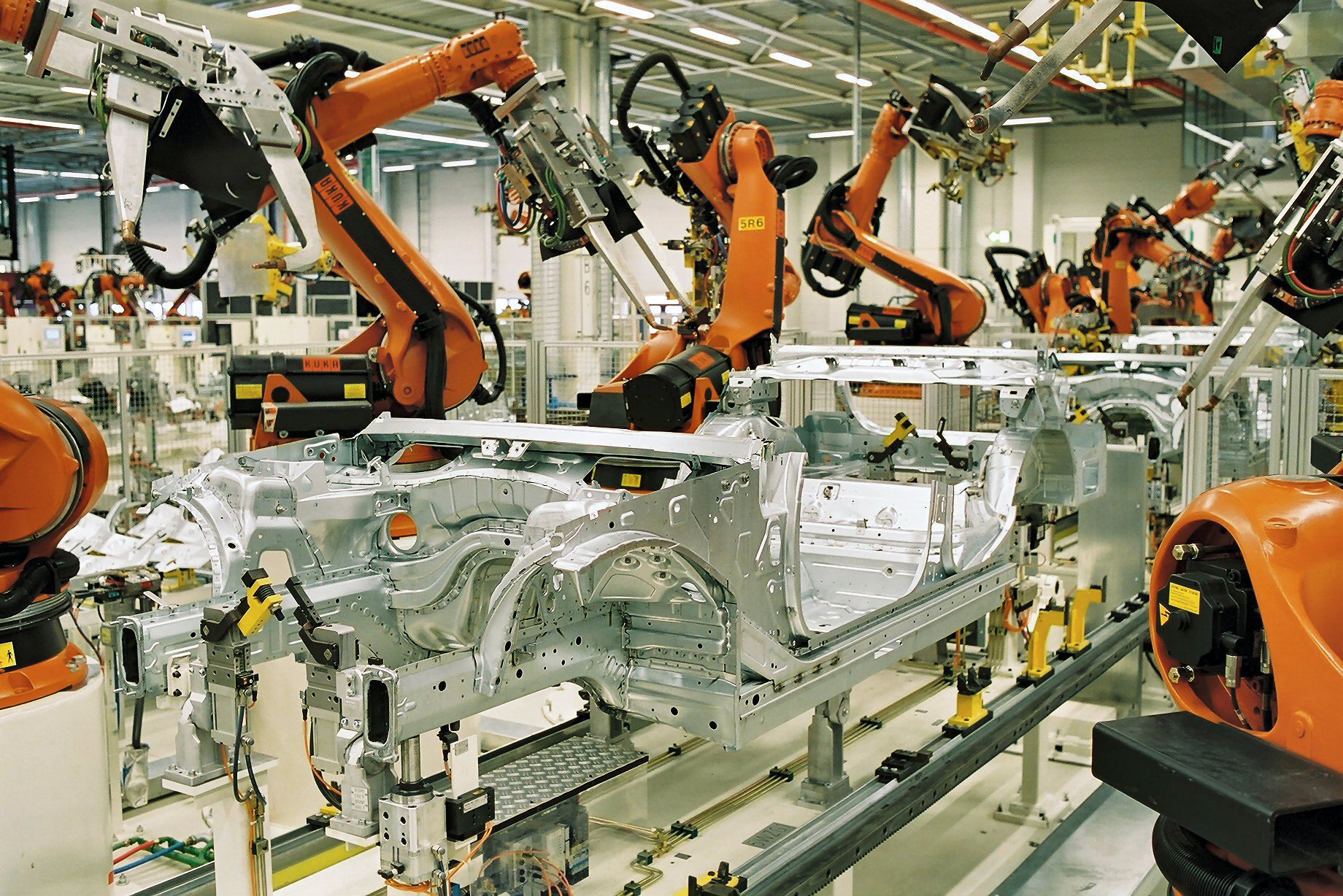
In a factory, for example, a robot arm can weld the same point thousands of times with remarkable precision. It works because the task is fixed, the parts arrive in the same position, and the environment is carefully designed around that one process.
But the real world is rarely that neat.
A box may be slightly tilted. A shelf may be partly empty. Lighting may change. A package may be soft rather than rigid. A worker may move a cart into the path. These are small adjustments for a human being, but for a robot they can be major challenges.
That is why fixed programming alone is not enough for the next generation of autonomous machines. Robots need to become more adaptive. They need to deal with variation, uncertainty, and imperfect conditions.
That is where robot learning becomes essential.
The four basic steps in robot learning
The technology behind robot learning can be complex, but the core idea can be understood through four simple steps.
-
Perception
First, the robot has to sense what is around it.
It may use cameras to see objects, depth sensors to estimate distance, force sensors to detect pressure, or touch sensors to understand contact. Perception is how the robot builds a working picture of the world around it.
If a robot is asked to pick up a box, for example, it first has to know where the box is, what shape it has, and whether anything is blocking access to it.
-
Decision
Next, the robot has to decide what to do.
Should it reach from the top or from the side? Should it use one hand or two? Should it move around an obstacle before attempting the task? This is the planning stage, where the machine chooses an action.
-
Action
Then comes the movement itself.
The robot reaches, grips, lifts, places, pushes, or walks. This is the moment where perception and decision turn into physical behavior.
-
Feedback and improvement
Finally, the robot evaluates what happened and learns from it.
Did the object slip? Was the grip too weak? Did the arm move too slowly? Did the robot hit something unexpectedly? That feedback helps the system improve the next attempt.
This is the basic loop of robot learning: sense, decide, act, improve.
How robots learn physical tasks in practice
There are several important ways robots are taught physical skills today.
Learning by demonstration
One of the most intuitive ways to teach a robot is simply to show it what to do.
A person may guide the robot arm through a movement, or perform the task while the robot records what happened. The robot then tries to learn the pattern and reproduce it.
This is similar to teaching by example.
Imagine teaching a robot to place objects into a tray. Instead of writing every tiny movement in code, a person demonstrates the task several times. The robot watches the motion, the timing, the grip, and the placement. Over time, it begins to learn the behavior.
This method is powerful because many physical tasks are easier to demonstrate than to describe precisely in software.
Learning through trial and error
Another important method is trial and error.
Here, the robot tries different actions, sees what works, and gradually gets better. If an action leads to success, that behavior is reinforced. If it leads to failure, the robot learns to avoid it.
Think of teaching a robot dog to walk on uneven ground. At first, it may wobble, slip, or lose balance. But after many attempts, it begins to discover better patterns of movement.
This approach can be very effective, especially for balance, locomotion, grasping, and motion planning. The challenge is that it often requires many repetitions, which is one reason simulation has become so important.
Learning in simulation before the real world
One of the biggest advances in robot learning is the use of simulation.
Instead of training a robot entirely in the physical world, developers first train it in a virtual environment. In simulation, the robot can practice thousands or even millions of times without damaging hardware, creating safety risks, or slowing down real operations.
For example, a warehouse robot can first be trained in a virtual warehouse. It can practice moving boxes, avoiding obstacles, and navigating aisles. Once it performs well in that simulated setting, the learning is transferred to the real machine.
This is faster, safer, and usually far less expensive than depending only on physical trial and error.
Of course, simulation is never a perfect copy of reality. Surfaces, lighting, textures, and physical forces may behave differently in the real world. Bridging that gap between simulation and reality remains one of the most important challenges in robotics.
Why physical tasks are harder than digital tasks
People often underestimate how difficult physical intelligence really is.
A chatbot works with words. A robot works with gravity, friction, weight, balance, contact, uncertainty, and motion. A small error in language might produce an awkward sentence. A small error in robotics might drop a package, damage equipment, or create a safety problem.
That is why robot learning is harder than many forms of software learning.
For a robot to perform a simple task like placing a bottle on a shelf, it has to understand where the bottle is, how tightly to grip it, how to avoid collisions, how far to extend the arm, how much force to use, and what to do if the shelf is already occupied.
Humans perform these adjustments almost automatically. Robots have to learn them step by step.
Why humanoid robots make robot learning even more important
Humanoid robots are attracting so much attention because they are meant to work in environments built for people.
Factories, warehouses, corridors, doors, tools, carts, shelves, and workstations were all designed around the human body. If a robot is expected to function in those spaces, it needs far more than scripted movement. It needs strong learning capability.
A humanoid robot may need to walk, balance, turn, grasp, carry, and respond to changing conditions, sometimes all within the same workflow. That is why robot learning is so central to the future of humanoids.
Without learning, a humanoid robot is just a highly complex machine. With learning, it becomes more adaptive, more useful, and far more capable of working in real environments.
Real-world examples of robot learning
The easiest way to understand robot learning is through examples.
A warehouse robot may learn to pick cartons of different sizes instead of only one box shape.
A logistics robot may learn to move through aisles even when carts, people, or packages create unexpected obstacles.
A manufacturing robot may learn to handle small variations in parts instead of rejecting every item that is not perfectly placed.
A service robot may learn to open different types of doors or carry objects with different weights and shapes.
In each of these cases, the robot is not just repeating a fixed script. It is improving its behavior through experience and variation.
The biggest challenges in robot learning
Robot learning is moving quickly, but major challenges still remain.
One challenge is reliability. A robot that performs well in a lab may still struggle in a noisy, cluttered, constantly changing real-world setting.
Another challenge is dexterity. Picking up an object is difficult enough; manipulating it skillfully is even harder.
Safety is also critical. Robots that learn physical behavior must operate in ways that do not harm people, damage products, or create operational risk.
Then there is the question of data. Robots need large amounts of useful training experience, and collecting that in the physical world is both slow and expensive.
Finally, there is the challenge of transfer. A robot may learn successfully in one setting but fail when conditions change even slightly. The real goal is not just to learn one task once. The real goal is to generalize that learning across tasks, environments, and conditions.
The future of robot learning
The future of robotics will depend heavily on how well machines can learn physical skills.
The first generation of robots automated fixed tasks.
The next generation is learning how to adapt.
The generation after that may learn across many tasks, many settings, and many forms of physical work.
That is why robot learning matters so much. It is the bridge between rigid automation and truly useful autonomous machines.
The robots that will matter most in the years ahead will not simply be the ones with better hardware. They will be the ones that can learn faster, adapt better, and operate more reliably in the human world.
That is the real science behind robot learning.
And that is why it will shape the future of autonomous machines.
Frequently Asked Questions (FAQ)
What is robot learning?
Robot learning is the process through which robots improve their ability to perform physical tasks using data, experience, and feedback rather than relying only on fixed programming.
Instead of executing rigid instructions, robot learning systems observe their environment, attempt actions, and refine their behavior based on outcomes. This approach enables robots to adapt to changing environments, handle variations in objects, and perform tasks more flexibly than traditional programmed robots.
How do robots learn to perform physical tasks?
Robots learn physical tasks through a cycle of perception, decision-making, action, and feedback.
Sensors allow robots to observe their environment, artificial intelligence models determine the appropriate action, and the results of each action provide feedback that helps the system improve. Over time, this learning loop allows robots to perform tasks such as picking objects, navigating spaces, and manipulating tools more reliably.
What are Vision-Language-Action (VLA) models in robotics?
Vision-Language-Action models are AI architectures that allow robots to connect visual perception, language understanding, and physical actions.
These models enable robots to interpret instructions such as “pick up the red box” or “place the object on the shelf” and translate them into movements. By linking vision, language, and motor control, VLA models are helping robots understand human instructions and perform tasks in more flexible ways.
How do Vision Language Action models help robots perform tasks?
Visual Language Action models allow robots to combine perception, reasoning, and action within a single system.
A robot can analyze visual input from cameras, understand instructions expressed in language, and generate the physical movements required to complete the task. This integration helps robots operate in complex environments where instructions and physical actions must be coordinated.
What is a world model in robotics?
A world model is an internal representation that a robot builds to understand and predict its surrounding environment.
Using a world model, a robot can simulate possible outcomes before performing an action. This helps robots plan movements, anticipate obstacles, and adapt their behavior when conditions change in real-world environments.
Why are world models important for autonomous robots?
World models allow robots to reason about their environment before taking action.
Instead of reacting blindly, robots can use internal simulations to predict how objects, surfaces, and movements will interact. This ability improves decision-making and allows autonomous machines to operate more safely and efficiently.
What is Physical AI?
Physical AI refers to artificial intelligence systems designed to operate in the real physical world rather than purely digital environments.
Physical AI systems must understand motion, object manipulation, spatial relationships, and environmental uncertainty. These capabilities enable robots and autonomous machines to perceive their surroundings, make decisions, and perform physical actions safely.
Why is Physical AI important for humanoid robots?
Physical AI is essential because humanoid robots must interact with environments designed for humans.
Factories, warehouses, tools, and workspaces were built around human bodies and movements. Physical AI allows humanoid robots to perceive objects, maintain balance, manipulate tools, and operate safely in these human-designed environments.
Why are physical tasks harder for robots than digital tasks?
Physical tasks involve uncertainty, motion, and real-world physics such as gravity, friction, and object interaction.
A robot performing a physical task must accurately perceive objects, adjust its movements, apply appropriate force, and respond to unexpected changes. These challenges make physical intelligence significantly more complex than purely digital problem-solving.
What role does perception play in robot learning?
Perception allows robots to detect and interpret their surroundings using sensors such as cameras, depth sensors, and tactile sensors.
Without perception, a robot cannot locate objects, detect obstacles, or understand spatial relationships. Perception is therefore the foundation that enables robots to interact effectively with the physical world.
How do robots learn from human demonstrations?
Robots can learn physical tasks by observing humans performing those tasks.
In this approach, a human demonstrates a movement while the robot records the motion, object positions, and interactions involved. Machine learning algorithms analyze these demonstrations so the robot can reproduce similar behaviors during future tasks.
Why is simulation important for training robots?
Simulation allows robots to practice tasks in virtual environments before operating in the real world.
In simulation, robots can perform thousands or millions of training attempts without damaging hardware or creating safety risks. Once the robot learns the task in simulation, the knowledge can be transferred to real-world robots.
What is the difference between robot learning and traditional robot programming?
Traditional robot programming relies on predefined instructions that specify exactly how a robot should perform a task.
Robot learning, in contrast, allows robots to improve their performance through experience and feedback. This enables robots to adapt to variations in objects, environments, and tasks instead of following rigid scripts.
Why are humanoid robots important for the future of robotics?
Humanoid robots are designed to operate in environments that were built for humans.
Because tools, machinery, doors, and infrastructure are optimized for human use, robots with human-like proportions can interact with these environments more easily. This makes humanoid robots particularly useful for performing tasks in existing workplaces.
How do world models help robots make better decisions?
World models allow robots to predict the consequences of their actions before executing them.
By simulating possible outcomes internally, robots can plan safer movements, avoid collisions, and choose more effective strategies for completing tasks. This predictive ability improves reliability and efficiency in autonomous machines.
What technologies enable modern autonomous machines?
Modern autonomous machines combine advanced sensors, artificial intelligence models, robot learning algorithms, and motion control systems.
Together, these technologies allow robots to perceive their surroundings, make decisions, and perform physical actions with increasing autonomy. Advances in these areas are rapidly expanding the capabilities of robotics systems.
Why is dexterity a major challenge in robotics?
Dexterity refers to the ability to manipulate objects with precision and control.
Many everyday tasks require subtle adjustments in grip strength, finger positioning, and movement. Replicating this level of control in robots is difficult because it requires highly accurate sensing, motion planning, and real-time adaptation.
How will robot learning change the future of work?
Robot learning will allow machines to perform a wider variety of physical tasks across industries.
Instead of being limited to repetitive automation, robots will increasingly assist humans in logistics, manufacturing, healthcare support, and service environments. This shift will transform how organizations design workflows and deploy automation.
Glossary
Robot Learning
The process through which robots improve their ability to perform tasks using experience, data, and feedback instead of relying only on pre-programmed instructions.
Autonomous Machines
Machines that can perform tasks independently by sensing their environment, making decisions, and taking actions without constant human control.
Perception
The ability of a robot to sense and understand its surroundings using sensors such as cameras, depth sensors, and touch sensors.
Imitation Learning
A robot learning method where robots observe human demonstrations and learn to reproduce similar actions.
Reinforcement Learning
A training approach in which robots learn through trial and error by receiving feedback about successful or unsuccessful actions.
Simulation Training
The process of training robots in virtual environments before deploying them in real-world settings.
Humanoid Robots
Robots designed with a body structure similar to humans so they can operate in environments built for people.
Robot Dexterity
The ability of a robot to manipulate objects with precision, such as gripping, lifting, and adjusting movement.