Why Is Embodied AI Important Today
Artificial intelligence has become remarkably capable at working with text, images, code, and data. It can answer questions, summarize information, generate content, and support complex decision-making.
Yet a new phase of AI is now emerging. Intelligence is no longer confined to screens and software systems. It is beginning to move into machines that can sense, move, and act in the physical world.
This shift is what makes embodied AI so important.
As we continue to advance in AI development, the next frontier is for machines to develop the ability to sense, interact, and learn about the world around them. This is what makes Embodied AI so important.
Embodied AI is not just about developing smarter robots; it is about creating machines that can develop a deeper understanding of the world through interaction. A machine can view an object, attempt to reach for it, feel resistance, adjust its grip to better attempt the task, and continue to learn from the experience. At this point, intelligence moves beyond being solely based on computation; it is now rooted in the physical world.
Therefore, Embodied AI will play a central role in the future of robotics and autonomous machines. It is the bridge that connects perception, decision-making, movement, and learning.
What Is Embodied AI?
Embodied AI is defined as artificial intelligence that exists in a physical system and learns or functions through interaction with the real world.
Simply stated, it is intelligence that has a “body”.
This body could be many things, including a humanoid robot, a warehouse robot, a robotic arm, a delivery robot, or any other type of autonomous machine. The form of the body is not as important as the fact that the system is not only processing information; it is perceiving the world around it, interpreting that information, and taking physical action.
A chatbot can explain to you how to open a door. An embodied AI-powered robot, however, must first locate the door, then identify where the handle is, figure out how to grip it, use the right amount of force to open it, and adjust if the door is resistant to opening. This example illustrates the major jump from digital intelligence to physical intelligence.
Embodied AI closes the gap between understanding and action.
Why Does Intelligence Need a Body?
Most people view intelligence as the ability to reason or solve problems. Intelligence, however, has a strong connection to interaction with the physical world.
Humans do not learn mainly by reading or watching. Humans learn by experiencing the physical world. A child does not learn how to hold a cup by reading instructions. The child sees the cup, reaches for it, drops it, tries again, and eventually gets it right. Interaction with the physical world is a fundamental part of learning.
Embodied AI takes the same approach to machines.
When a robot can physically interact with objects, places, tools, and people, it can gain a greater level of learning than would be possible by merely observing the world. Instead of simply viewing the world, it is a participant in it. Every action generates feedback. Every piece of feedback contributes to the refinement of the next action.
A body, therefore, gives intelligence a way to enter the world. It establishes a cycle of constant interaction between sensation, action, and learning.
How Does Embodied AI Differ from Traditional AI?
Traditional AI systems generally exist in a digital space. They process text, images, transactions, and other structured data. They may predict results, provide suggestions, or reply to user input. However, they do not interact directly with the laws of physics.
Embodied AI must.
A physical machine is uncertain at every instant. Objects may be off-balance. Surfaces may be slippery. Lighting conditions may vary. A package may weigh more than expected. A door may be stuck. A person may unexpectedly stand in front of the machine.
These scenarios are normal for humans, but they represent real challenges for machines.
For embodied AI, it is not enough for a system to produce the correct answer in theory. The system must translate perception into motion and motion into successful outcomes. The digital world is structured and predictable. The physical world is dynamic and messy.
That difference makes embodied AI far more complex—and far more powerful.
The Building Blocks of Embodied AI
Embodied AI is not a single technology. It arises from multiple technologies working together.
- Perception is the initial component. A machine must perceive its surroundings using tools like cameras, depth sensors, touch sensors, or force sensors. Perception enables the detection of objects, distance, obstacles, and movement.
- Reasoning comes after perception. The system must interpret what it perceives and decide upon a response. Can the object be reached? Is there something obstructing the path? Should the robot push, pull, lift, or wait?
- Action converts the decision into actual movement. The machine must reach, grip, walk, balance, rotate, carry, or position objects correctly and safely.
- Feedback completes the cycle. After an action, the system assesses what occurred. Did the object fall? Was too much force used? Did the movement fail due to incorrect positioning? Every outcome provides an opportunity to refine performance.
- Adaptation is the last element. A good embodied AI system adjusts when conditions change. It does not cease functioning merely because an object is positioned slightly differently. Rather, it adjusts its behavior.
Combining these elements begins to resemble physical intelligence.
Examples of Embodied AI
The idea becomes more apparent when considering everyday examples.
Suppose a warehouse robot is charged with relocating cartons. Cartons are never uniform. They vary in size, placement, and weight. They may be damaged or stacked irregularly. A robot with embodied AI can perceive these differences and make adjustments to its grip and movement.
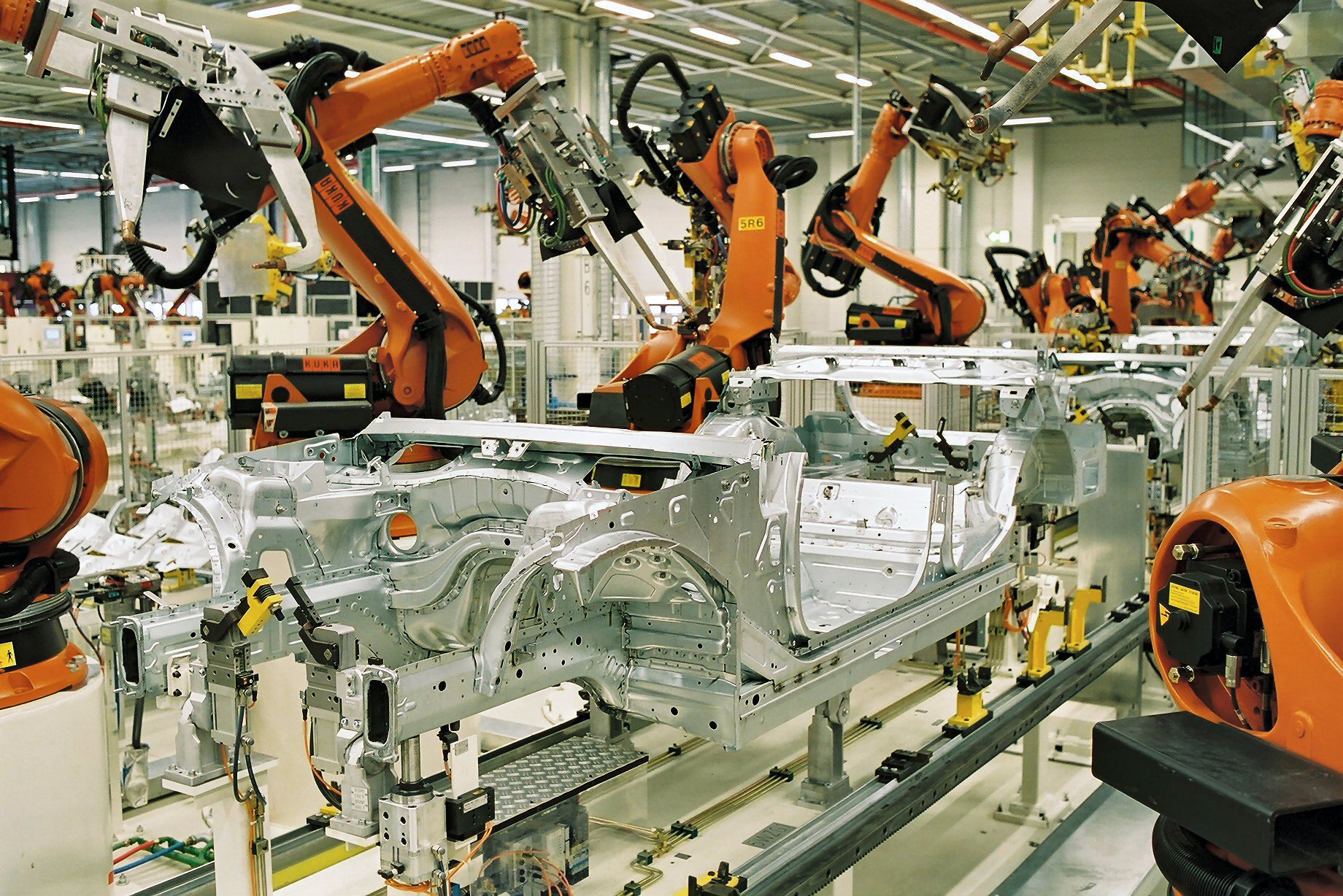
Consider a humanoid robot performing tasks in a manufacturing facility. The robot must traverse around machinery, pick up a tool, open cabinets, and move parts to another workstation. All steps require perception, reasoning, and coordination of movement.
Or consider a service robot operating in a hospital setting. The robot may transport medical supplies, navigate busy corridors, open various types of doors, and adjust to changing traffic patterns. These are not sequential scripts. They are responsive to a constantly changing environment.
In each scenario, the robot is not simply executing a script. It is actively engaging with the environment and gaining knowledge from the experience.
Why Embodied AI Matters for Humanoid Robots
Humanoid robots have captured attention partly because the world around us was designed for human bodies.
Doors, shelving units, stairways, tools, carts, workstations, and controls are all built for human sizes and movements. For a robot to operate successfully in a world built for humans, it must be able to balance, move, grasp, carry, and react to unpredictable events.
Embodied AI provides a foundation for humanoid robotics to achieve this capability.
How Embodied AI Relates to Modern Robotics
Embodied AI also serves as a platform for explaining several key concepts in robotics.
It is closely related to robot learning, since machines improve their abilities through action and feedback.
It ties in with physical AI, which is focused on designing intelligence to interact with the physical world.
It uses world models, which are internal representations that enable machines to anticipate what will occur next.
It can be combined with Vision-Language-Action systems, which enable robots to visually examine their surroundings, understand commands, and transform those commands into actions.
Embodied AI does not replace these technologies; rather, it helps to clarify how they combine into a comprehensive system.
Why Embodied AI Remains Difficult
Although it holds great potential, embodied AI still presents a number of challenges.
One difficulty is the inherent variability in the physical world. Digital systems operate in controlled environments, whereas physical environments consist of endless variation.
Another difficulty is movement. Identifying an object is a relatively simple task. Moving to that object and accomplishing the desired objective (reaching, grasping, moving) in a smooth and accurate manner is a far more complex process.
A third challenge is reliability. A robot may operate flawlessly in a specific environment but be unable to operate reliably when light levels, surface conditions, or object orientations change.
A fourth challenge is safety. When machines that are capable of movement and action are in close proximity to people, they must not cause harm or disrupt activity.
The fifth and final challenge is scale. While demonstrating successful operation of a single prototype is a significant accomplishment, deploying thousands of dependable robots into operational settings is a far larger challenge.
These challenges illustrate why embodied AI represents both a fascinating area of study and a significant technical undertaking.
Where Embodied AI Will Create the Most Impact
The earliest impact of embodied AI is likely to appear in environments where physical work is repetitive, physically demanding, or difficult to staff consistently.
Examples include warehouses, logistics networks, manufacturing floors, inspection operations, and support functions in healthcare settings.
In these environments, intelligent machines can improve consistency, reduce physical strain on workers, increase throughput, and assist with routine tasks.
Over time, the influence of embodied AI may expand into many other domains. However, the most immediate value will come from areas where physical intelligence can solve practical operational problems.
The Future of Autonomous Machines
Embodied AI represents a major shift in how we think about machine intelligence.
Earlier generations of AI focused primarily on analyzing and generating information. The next generation focuses on engaging with the physical world.
Embodied AI moves intelligence from observation to interaction. It brings together perception, movement, learning, and adaptation into a unified capability.
The autonomous machines that matter most in the coming years will not simply be those with the most sophisticated algorithms. They will be the ones that can sense more effectively, move more intelligently, learn more quickly, adapt more safely, and operate reliably in complex environments.
That is the promise of embodied AI.
And it is why embodied AI is emerging as the next frontier of robotics and autonomous machines.
FAQ
What is embodied AI?
Embodied AI refers to artificial intelligence systems that exist within physical machines and learn through interaction with the real world. Unlike traditional AI that only processes digital data, embodied AI combines perception, reasoning, and physical action. This allows robots and autonomous machines to sense their environment and perform tasks.
How is embodied AI different from traditional AI?
Traditional AI operates mainly in digital environments, analyzing data such as text, images, or transactions. Embodied AI operates in the physical world, where machines must deal with movement, force, uncertainty, and real-world constraints. It connects intelligence directly to physical action.
How does embodied AI relate to robotics?
Embodied AI is a core concept in modern robotics. It enables robots to perceive their surroundings, interpret signals from sensors, and perform physical tasks through actuators and mechanical systems. In robotics, embodied AI allows machines to move beyond rigid automation and operate in complex environments.
What is Physical AI and how is it related to embodied AI?
Physical AI refers to artificial intelligence systems designed to operate in the real physical world. It focuses on enabling machines to understand motion, objects, forces, and spatial environments. Embodied AI represents the idea that intelligence emerges when a machine with a physical body interacts with the world.
What are world models in robotics?
World models are internal representations that robots use to understand and predict their environment. These models allow machines to anticipate outcomes before taking action, helping them plan movements, avoid obstacles, and interact with objects safely.
What are Vision-Language-Action (VLA) models?
Vision-Language-Action models combine visual perception, language understanding, and physical action. These systems allow robots to interpret instructions, understand their surroundings, and translate human commands into real-world movements.
Why are humanoid robots closely connected to embodied AI?
Humanoid robots are designed to function in environments built for humans. Since doors, tools, and workspaces are designed around the human body, humanoid robots require embodied intelligence to navigate spaces, manipulate objects, and perform tasks effectively.
Why is embodied AI considered the next frontier of robotics?
Embodied AI integrates perception, reasoning, movement, and learning into a single system. This allows machines to interact with dynamic environments rather than following fixed instructions. As robotics advances, embodied AI will play a major role in enabling adaptable and autonomous machines.
What industries will benefit from embodied AI?
Embodied AI is expected to transform industries that involve repetitive or physically demanding tasks. Key sectors include logistics, manufacturing, warehouse automation, healthcare support, inspection operations, and infrastructure maintenance.
How do robots learn physical tasks using embodied AI?
Robots learn physical tasks by sensing their environment, performing actions, and improving through feedback. Techniques such as robot learning, simulation training, and reinforcement learning help machines refine their movements and adapt to new situations.
Glossary
Embodied AI
Artificial intelligence embedded in physical machines that can sense, learn, and act within the real world.
Robotics
A field of engineering focused on designing machines capable of performing physical tasks through sensors, control systems, and mechanical components.
Autonomous Machines
Machines capable of operating independently using artificial intelligence, sensors, and automated decision-making systems.
Physical AI
AI systems designed to understand and interact with the physical environment, including motion, objects, and spatial relationships.
World Models
Internal predictive models used by robots to represent their environment and simulate future outcomes before taking action.
Vision-Language-Action (VLA) Models
AI architectures that combine visual perception, natural language understanding, and physical action to enable robots to execute instructions.
Robot Learning
Techniques that allow robots to improve their behavior through data, experience, and feedback rather than relying only on fixed programming.
Robotic Perception
The ability of robots to interpret sensor data such as images, depth signals, and environmental measurements.
Humanoid Robots
Robots designed with a human-like structure so they can operate in environments built for humans.