Humanoid robots are moving from research labs and technology showcases into serious enterprise discussions. In 2026, they are no longer viewed only as futuristic machines designed to attract attention. They are increasingly being evaluated as practical business tools that can support operations in environments built for people.
As a result of increased technological advancements, such as AI, perception systems, simulation, and robot control, a new generation of machines is being developed that are much more capable than previous generations.
This shift matters because most workplaces were designed for human movement, human reach, and human tools. Factory floors, warehouses, hospitals, retail stores, and service centers are full of stairs, doors, carts, shelves, panels, handles, and equipment meant for human use. Traditional automation works well in highly structured settings, but it often struggles when workspaces are dynamic or when tasks change frequently. That is where humanoid robots are generating interest.
Enterprises are not adopting humanoid robots because they look like humans. They are exploring them because a human-like form can help machines operate in human-centered spaces with less redesign. The idea is simple: instead of rebuilding the workplace for automation, bring automation that can fit into the workplace.
There are two types of automation.
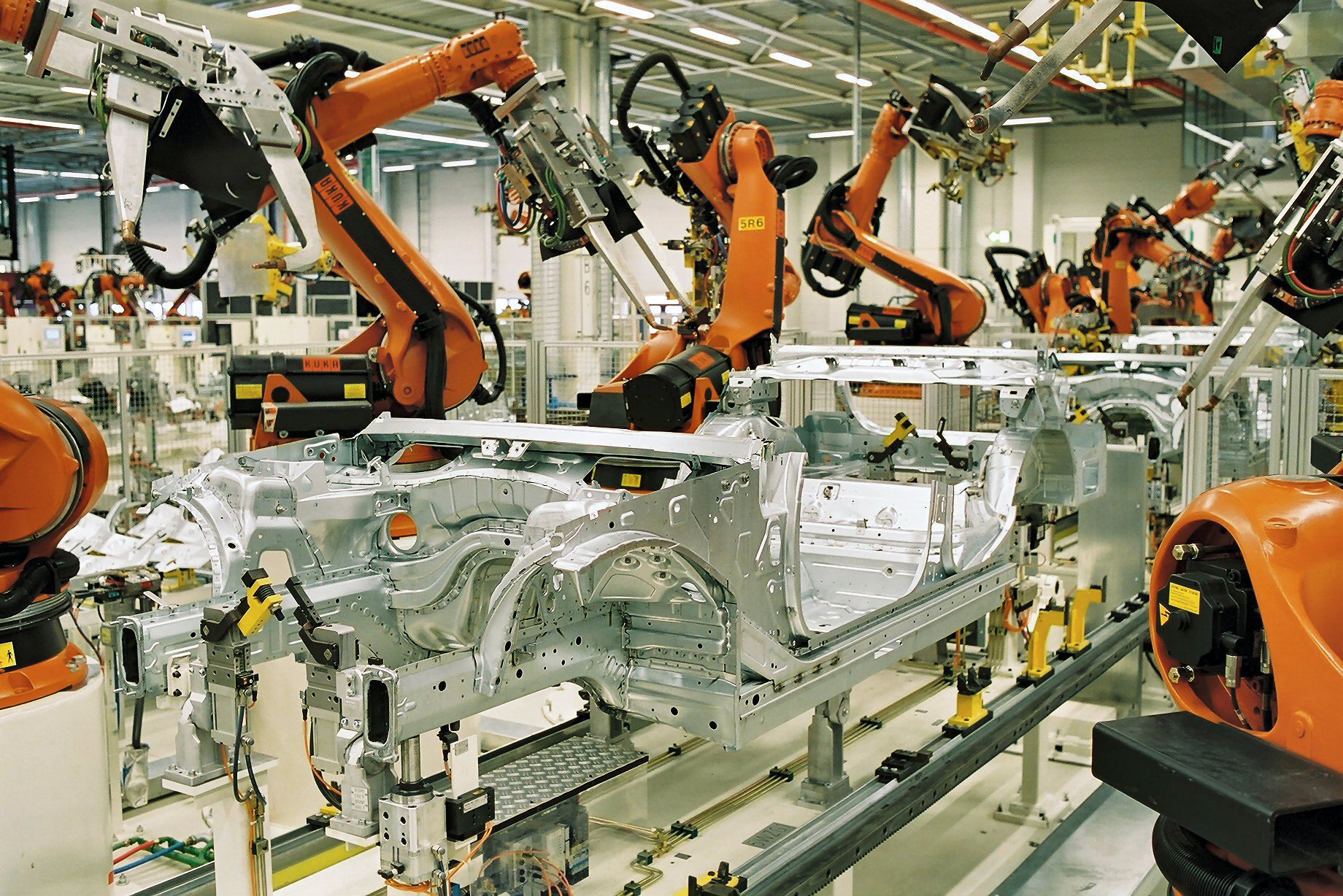
One type is designed to perform fixed, repeatable tasks in controlled settings. An example of this is a robotic arm welding in a fixed position. While this is very good at doing one thing, enterprises also have many tasks that are repetitive, but not repeatable.
Examples include movement across spaces, handling different objects, adapting to changing situations, and operating in conjunction with people.
A distribution center represents an excellent example of this. A worker may spend hours moving containers, scanning items, rearranging misplaced packages, processing returns, and resolving bottlenecks. While these tasks are repetitive, they are not identical. There are changes in layouts, packaging varieties, aisle congestion, etc.
In such an environment, fixed automation can be inadequate.
Here is where humanoid robots can fill a void. Humanoid robots are designed to operate in the same space as humans and can be used in a variety of situations.
Humanoid robots are not intended to replace existing robotics. They are meant to extend automation into applications where flexibility is more important than precision repetition.
In addition to manufacturing support, warehouse and intralogistics operations, inspection and routine rounds, healthcare and facility support, and retail and customer-facing assistance are examples of enterprise use cases for humanoid robots.
Manufacturing Support
In highly automated manufacturing environments, people are still required to perform a wide variety of support functions. Some examples of these support functions include moving parts between stations, loading materials, carrying tools, repositioning items, and supporting inspection.
While these functions are not necessarily complex, they are repetitive and physically demanding.
An example includes an operator who spends the majority of his/her day traveling back and forth to obtain parts from storage. This is not contributing to high-value production; however, it is necessary.
A humanoid robot that can safely move throughout the same environment can help reduce fatigue and improve overall process efficiency without having to modify the factory layout.
Warehouse and Intralogistics Operations
Warehousing is another area that has tremendous potential for humanoid robots. Applications include pick assistance, restocking shelves, returning items to inventory, and exception management.
Because humanoid robots can perform tasks in a flexible manner, they can augment rigid warehouse automation systems to improve throughput during peak demand periods.
Additionally, humanoid robots can help reduce the amount of repetitive physical labor performed by human workers.
Inspection and Routine Rounds
In many industries, employees spend considerable amounts of time performing routine inspections. These inspections can include checking equipment, reading gauges, observing conditions, and visually inspecting items.
In many instances, routine inspections involve traversing large distances on a daily basis.
By utilizing humanoid robots to perform routine rounds, skilled workers can dedicate themselves to solving problems rather than monitoring equipment.
Healthcare and Facility Support
In hospitals and service-based environments, humanoid robots can be utilized to support non-clinical functions.
Examples of non-clinical functions include transporting supplies, delivering items, and providing directions to visitors.
The intent is not to replace professionals. Rather, it is to allow professionals to dedicate more time to critical responsibilities by automating routine support functions.
Retail and Customer-Facing Assistance
In retail environments, humanoid robots can be used to support functions such as stock movement, shelf auditing, and basic customer assistance.
However, the success of humanoid robots in customer-facing applications will depend upon reliability and the comfort level of customers with respect to the robots.
Therefore, retailers will have to ensure that these deployments provide clear value to the customer and are not simply viewed as novel additions.
The Architecture Behind Enterprise Humanoid Robots
From an external perspective, a humanoid robot appears to be a single machine. Internally, it is a combination of multiple layers. Each layer must work in unison to produce a successful outcome.
The layers include:
Perception Layer
This layer is responsible for understanding the robot’s environment. To accomplish this, the robot uses visual, spatial, and sensory information to identify objects, people, and movement.
This layer is crucial to ensuring both the safety and effectiveness of the robot.
Intelligence Layer
This layer represents the decision-making capability of the robot. It interprets instructions, understands context, and determines the next course of action based on what the robot perceives and what it has been instructed to do.
Motion Control Layer
This layer controls the physical movement of the robot. Movement includes walking, balancing, lifting, grasping, and interacting with objects.
This is one of the most difficult layers to develop, as the real world is inherently unpredictable.
Simulation and Training Layer
Prior to deployment, robots must be tested in simulated environments. This allows organizations to fine-tune behavior, simulate various scenarios, and minimize risk before real-world use.
Enterprise Integration Layer
This is where true business value is generated. When a robot integrates with business systems (e.g., warehouse platforms, manufacturing systems, maintenance workflows, and analytics tools), it becomes part of enterprise operations.
Without integration, a robot only completes isolated tasks. With integration, it contributes to business processes.
Challenges Enterprise Leaders Must Overcome
Reliability in Real-World Conditions
While robots perform consistently in controlled demonstration environments, there is no guarantee that they will continue to perform reliably in real-world environments.
Enterprises require systems that can maintain consistent performance despite varying levels of uncertainty.
Safety in Shared Environments
Because humanoid robots interact with humans, safety is a primary consideration.
Organizations must implement safeguards such as controlled motion, emergency stop capabilities, and human override options to prevent harm.
Cost and Return on Investment
Due to the high cost of humanoid robots, adoption will depend on clearly defined business cases—especially in environments where tasks are repetitive, physically demanding, or difficult to automate.
Dexterity and Adaptability
Replicating human-level dexterity remains a challenge. Robot capabilities related to delicate handling, irregular objects, and variable conditions are still limited.
Complexity of Integration
To generate value, robots must be integrated into existing enterprise workflows and systems.
Integration with processes, permissions, and reporting structures is often more complex than expected.
Security and Operational Control
With increased connectivity, robots introduce new considerations around system access, software updates, and operational control.
Enterprises must manage these aspects effectively to ensure successful deployment.
Action Steps for Enterprise Leaders
Enterprise leaders should begin by identifying tasks that are repetitive, physically demanding, and difficult to automate using existing technologies.
Next, organizations should conduct pilot programs to measure inefficiencies, define clear success metrics, and evaluate effectiveness based on actual operational improvements.
Like any other enterprise technology, humanoid robots should be evaluated based on outcomes, reliability, and scalability.
The Future Roadmap
Although humanoid robots are still in the early stages of enterprise adoption, their role is becoming more clearly defined.
They will not replace neither workers, nor will they replace traditional robotics. Their primary value lies in bridging the gap between automation and environments that are human-centric, dynamic, and difficult to standardize.
The organizations that will benefit the most will not be those chasing trends. Instead, they will be those that identify relevant use cases, design practical solutions, integrate thoughtfully into existing systems, and scale based on proven value.
Glossary
1. Humanoid Robots
Robots designed with a human-like structure, enabling them to operate in environments built for people, such as factories, warehouses, and service spaces.
2. Enterprise Robotics
The use of robotic systems within business operations to improve productivity, safety, and efficiency across industries.
3. Fixed Automation
Automation systems designed for repetitive, predictable tasks in controlled environments, such as robotic arms on assembly lines.
4. Flexible Automation
Automation that can adapt to changing tasks, environments, and inputs, often enabled by AI and advanced sensing capabilities.
5. Perception Systems
Technologies that allow robots to understand their environment using sensors such as cameras, depth sensors, and motion detectors.
6. Robot Control Systems
Systems responsible for translating decisions into physical movements like walking, lifting, and object manipulation.
7. Simulation in Robotics
The use of digital environments to train, test, and validate robot behavior before real-world deployment.
8. Enterprise Integration
The process of connecting robots with business systems such as warehouse management, manufacturing execution, and analytics platforms
9. Intralogistics
Internal movement of goods within facilities such as warehouses and factories, including picking, transport, and storage.
10. Human-Robot Collaboration
A working model where robots and humans operate together in shared environments to complete tasks efficiently and safely.
FAQ
1. What are humanoid robots used for in enterprises?
Humanoid robots are used for tasks such as material handling, warehouse support, inspection, facility operations, and basic customer assistance. They are especially useful in environments where flexibility and human-like movement are required.
2. Why are enterprises adopting humanoid robots?
Enterprises are adopting humanoid robots to improve productivity, reduce repetitive physical work, enhance safety, and automate tasks that are difficult to handle using fixed automation systems.
3. How do humanoid robots differ from traditional industrial robots?
Traditional industrial robots perform fixed, repetitive tasks in controlled environments, while humanoid robots are designed to operate in dynamic, human-centric environments and handle a wider variety of tasks.
4. What industries can benefit from humanoid robots?
Industries such as manufacturing, warehousing, healthcare, retail, logistics, and facility management can benefit from humanoid robot adoption.
5. What are the key challenges in deploying humanoid robots in enterprises?
Key challenges include reliability in real-world conditions, safety in shared environments, high costs, limited dexterity, integration complexity, and operational control.
6. Are humanoid robots replacing human workers?
No, humanoid robots are primarily designed to augment human work by handling repetitive, physically demanding, or routine tasks, allowing people to focus on higher-value activities.
7. What is the architecture of a humanoid robot system?
A humanoid robot system typically includes perception systems, decision-making intelligence, motion control, simulation and training environments, and integration with enterprise systems.
8. How should enterprises start adopting humanoid robots?
Enterprises should begin with pilot projects focused on specific tasks, define measurable outcomes, and scale deployments based on proven value and operational performance.