Imagine stepping into a car that not only drives itself, but it knows who you are, how you feel, and what you need before you even say a word. That’s the magic of today’s Human-Machine Interfaces (HMIs). They’re not just about buttons and screens anymore. They’re about creating a seamless, intelligent, and even emotional connection between you and your vehicle. Let’s take a ride through the most exciting HMI innovations that are redefining what it means to “drive.”
The Future of Driving: How HMIs Are Redefining Autonomous Vehicles
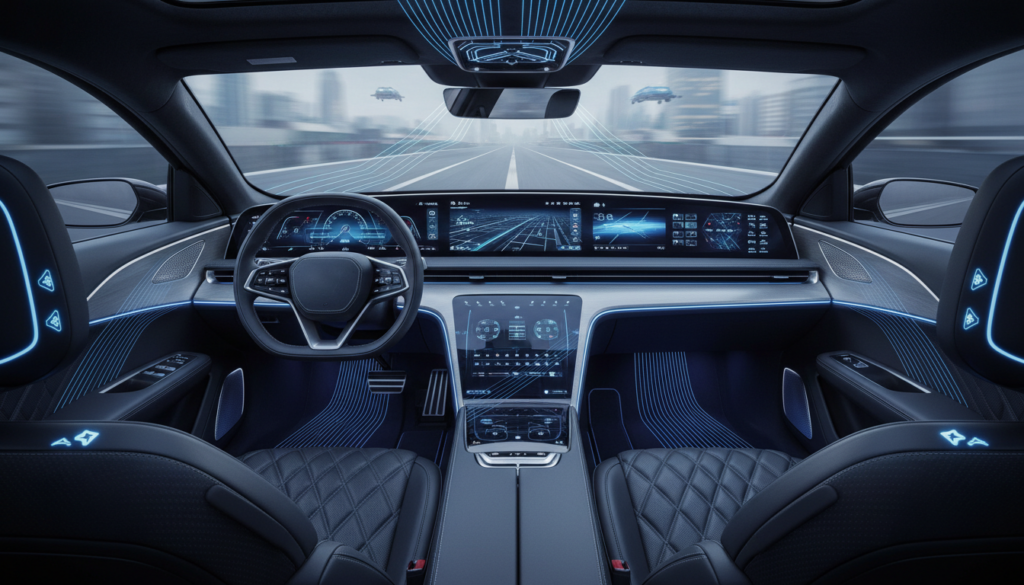
Buckle up, because the future of driving isn’t about letting the car take the wheel—it’s about creating an experience that feels intuitive, immersive, and downright futuristic. Human-Machine Interfaces (HMIs) in autonomous vehicles are evolving from clunky buttons and screens into seamless, intelligent systems that know you better than your best friend. Let’s dive into how these advancements are transforming the way we interact with autonomous vehicles.
Visual Interfaces: Seeing the Road in a New Light
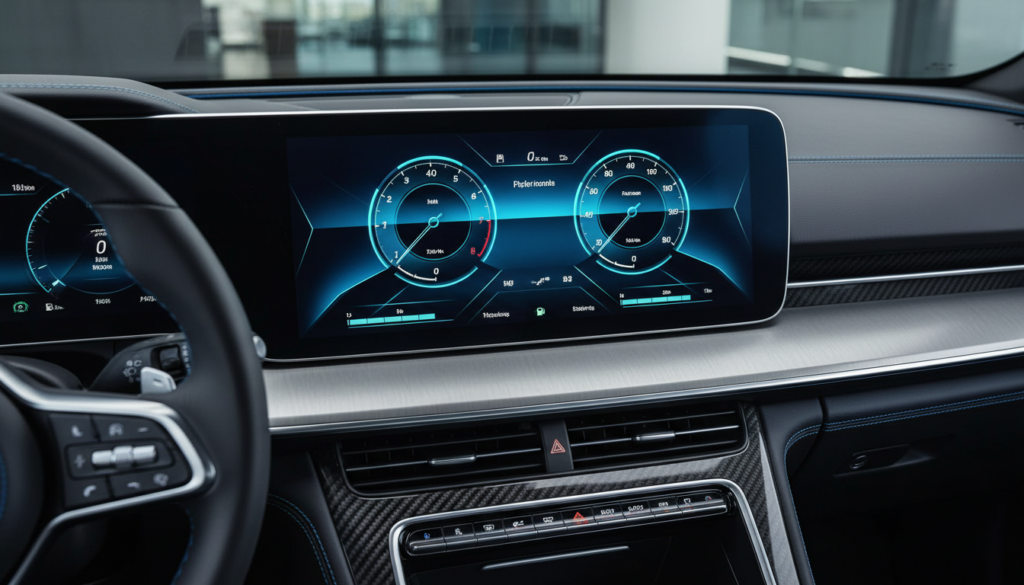
Imagine a dashboard that’s not just a screen but a canvas of information tailored to your needs. Visual HMIs are the stars of concept cars, delivering critical data with Hollywood-level flair. Take the Mercedes-Benz CLA Class, which flaunts the MBUX Superscreen—a trio of mini-LED displays stretching across the dashboard. Powered by a proprietary MB. OS operating system integrates everything from navigation to mood-setting ambient lighting. Its “emotional” virtual assistant, a star-shaped avatar, even shifts animations based on your vibe, making interactions feel personal and alive.
Then there’s the Corning Connected Car, a collaboration with Sundberg-Ferar, featuring a pillar-to-pillar Gorilla Glass dashboard. When off, it looks like a sleek trim; when on, it transforms into a touch-sensitive display. Paired with an Augmented Reality Heads-Up Display (AR-HUD), it projects navigation arrows and hazard warnings right onto the windshield, so you never take your eyes off the road. These systems use AI to adapt layouts based on your gaze or driving context, like enlarging collision alerts if you’re distracted. It’s not just about looking cool—it’s about keeping you safe and informed.
Haptic Interfaces: Feeling the Drive
HMIs aren’t just for your eyes, they’re for your hands, too. Haptic interfaces use touch and vibration to communicate, and concept cars are pushing this tech to new heights. The Honda 0 Series “Saloon” ditches the traditional steering wheel for a steer-by-wire yoke that delivers haptic feedback to mimic road feel, freeing up cabin space and making driving feel like a sci-fi game. Vibrations pulse through the yoke to warn of lane departures or blind spots, ensuring you stay in control without glancing away.
The Corning Connected Car takes it further with a curved haptic console made of glass, replacing buttons with tactile feedback that vibrates to confirm your commands. It’s like your car is giving you a subtle high-five for nailing that climate control adjustment. These systems also sync with seat haptics, like those in the Cadillac Safety Alert Seat, which pulse directionally to signal risks—left for a left-side hazard, right for the other. It’s a language of touch that’s intuitive and distraction-free.
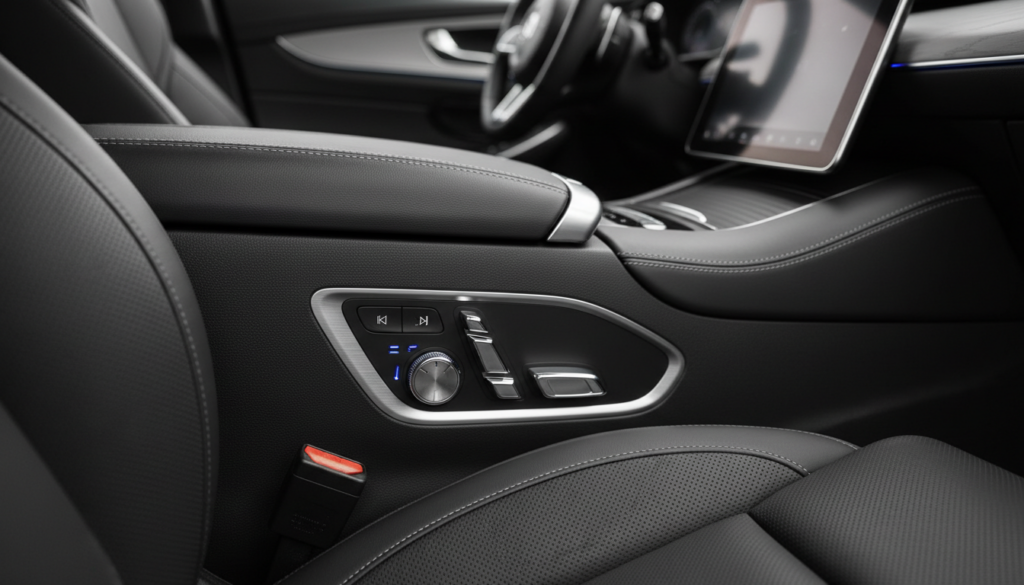 The Cadillac Safety Alert Seat provides directional haptic feedback through the driver’s seat cushion. It vibrates on the left or right side to warn the driver of lane departure or potential collisions.
 Steer-by-wire system with a yoke-style controller eliminates mechanical connection to wheels, relying on electronic signals and haptic feedback to simulate road feel directly through the driver’s hands
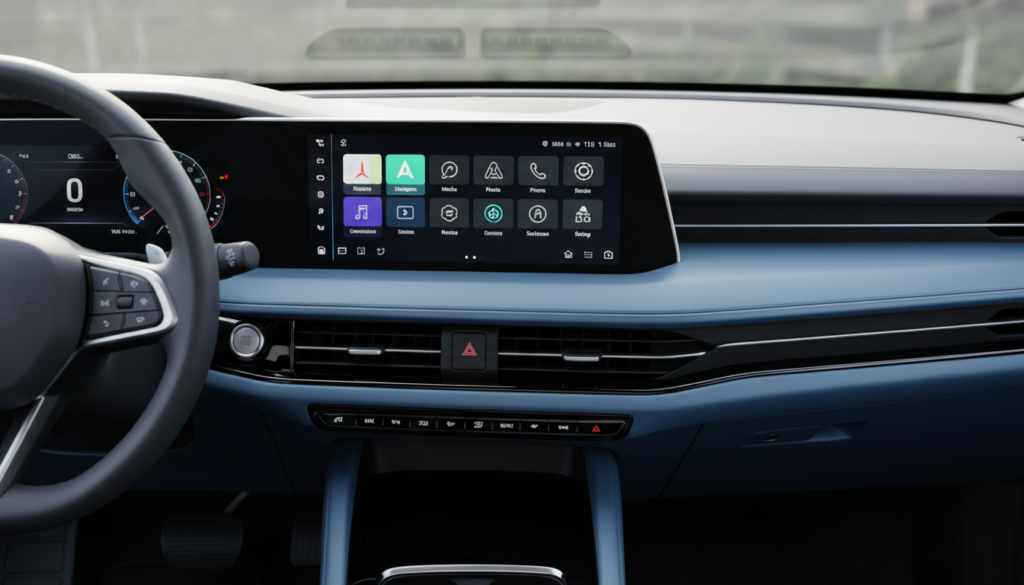 VW is reintroducing physical buttons for core functions. However, its large central touchscreen remains, and the plan is to enhance usability with more intuitive on-screen controls.
Auditory Interfaces: A Symphony of Smarts
Your car’s voice assistant is no longer a robotic Siri wannabe. In concept cars, auditory HMIs are conversational and context aware. The Volkswagen ChatGPT Integration in its IDA voice assistant lets you ask anything from “What’s the history of that castle?” to “Turn up the AC.” It understands natural language and keeps multi-turn conversations flowing, so you don’t have to repeat yourself. Meanwhile, the Mercedes-Benz MBUX in the EQS and S-Class responds to “Hey Mercedes” with near-human finesse, controlling everything from seats to screens.
Beyond voice, 3D spatial audio in these vehicles places alerts where they matter—like a chime on your left for a blind-spot warning. Generative sound design takes up a notch, tweaking pitch and rhythm based on real-time data, like the urgency of a collision warning. Even electric vehicles get a sonic identity with Advanced AVAS (Acoustic Vehicle Alerting Systems), crafting brand-specific hums that alert pedestrians while sounding sleek.
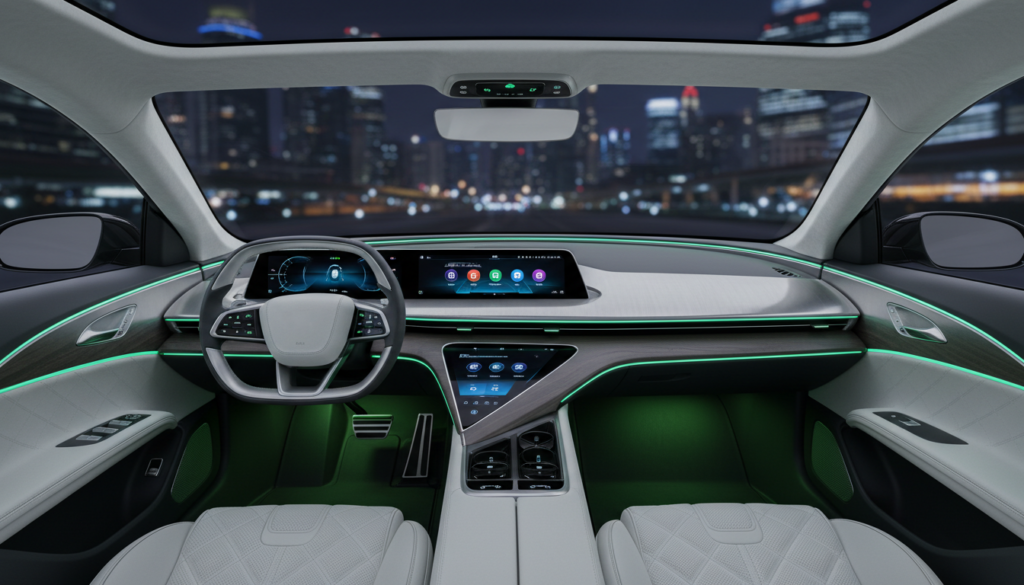 The “Hey Mercedes” assistant was a trailblazer in natural language control. In the latest models like the EQS and S-Class, it’s more intelligent than ever, controlling nearly every vehicle function and integrating with the massive “Hyperscreen” for a seamless voice-to-visual experience.
Gestural Interfaces: Wave Hello to Control
Why touch when you can wave? Gestural HMIs are making cars feel like extensions of your body. The BMW i Vision Dee introduces a Mixed Reality Slider—a “phygital” touchpoint controlled by gestures and proximity sensing. Point to select, pinch to zoom, or twirl your finger to adjust volume, all without touching a screen. It’s paired with gaze control, so looking at the media player activates gesture mode for that specific function.
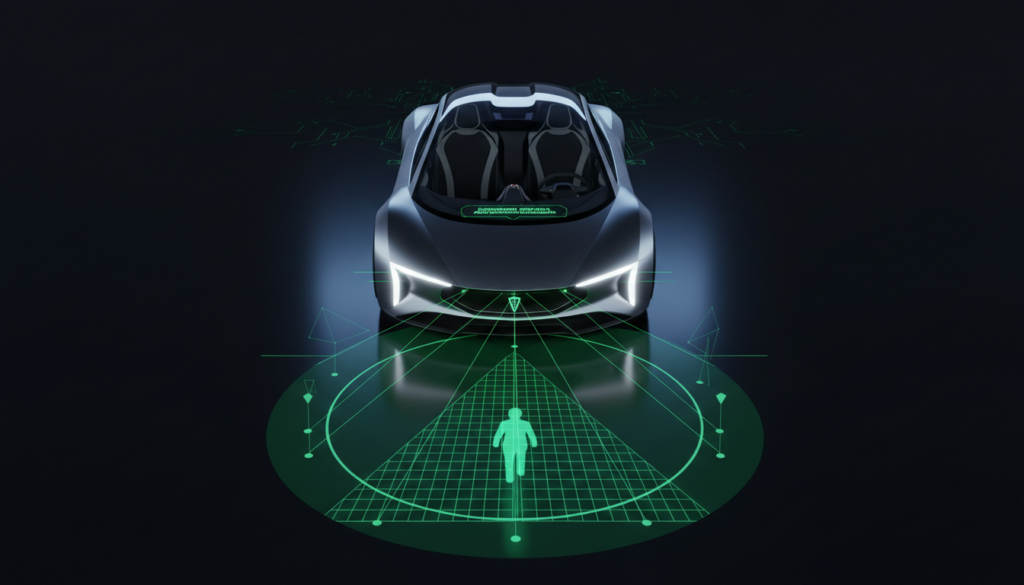
Driver Monitoring Systems (DMS), like those in the Mercedes-Benz VISION EQXX, use near-infrared cameras and AI to track your eyes, head, and even vitals. They detect distraction or drowsiness, nudging ADAS to issue alerts or adjust cruise control. Plus, facial recognition loads your personalized settings the moment you sit down. It’s not just about safety—it is about making every drive feel like your drive.
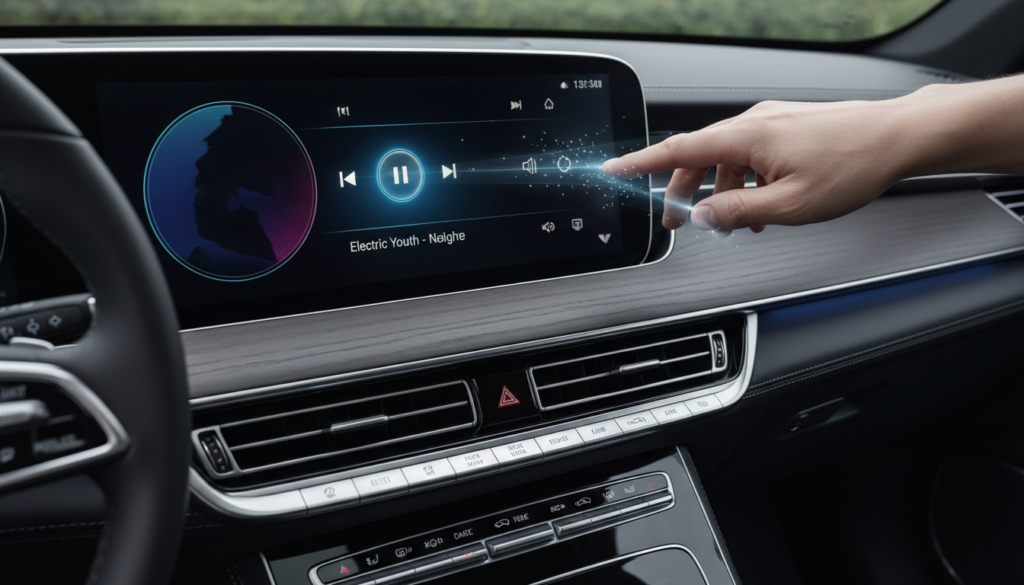 This concept car fully embraces contactless interaction. Its “Mixed Reality Slider” on the dashboard is a “phygital” (physical + digital) touchpoint that is controlled without direct physical contact, likely using a combination of gesture and proximity sensing to blend the driver’s real-world environment with digital information.
Concept Cars: The Playground of HMI Innovation
Concept cars like the Kia Concept PV5 show HMIs aren’t just for passengers, they’re for reimagining mobility. Its modular cockpit swivels the steering wheel away to create a workspace, with a rail system swapping seats or displays. The HMI syncs with fleet software for real-time route and charging management, perfect for autonomous delivery or ridesharing. These vehicles aren’t just prototypes; they’re proof that HMIs can turn cabins into living spaces, blending work, play, and travel.
The Road Ahead: Human-Centered Autonomy
From holographic projections to biometric monitoring, HMIs in concept cars are making autonomous vehicles feel less like machines and more like partners. They adapt to your mood, anticipate your needs, and communicate in ways that feel natural. Whether it’s the real-time 3D graphics of the Mercedes-Benz CLA Class or the haptic yoke of the Honda Saloon, these innovations are setting the stage for a future where driving isn’t just autonomous—it’s deeply human-centered. So, next time you see a concept car, don’t just admire the shine. Look inside, it’s where real magic happens.
Adoption in Other Autonomous Machines
Advanced HMI technologies are also being adopted in autonomous delivery robots, agricultural machinery, and aerial drones. These systems use similar principles — sensor fusion, adaptive feedback, and multimodal interfaces — to improve safety and efficiency in non-passenger applications. For example, autonomous tractors use haptic steering and HUD overlays to assist operators during semi-autonomous fieldwork.
Conclusion
As autonomous vehicles become more prevalent, HMIs will play a pivotal role in bridging the gap between human intent and machine execution. From immersive visual displays to intelligent voice assistants and tactile feedback systems, the future of driving is not just autonomous — it’s interactive, adaptive, and deeply human-centered.