Introduction: Dissolving the Hardware-Software Boundary
Conventional computing maintains rigid demarcation between software and hardware layers. Developers author code, compilers transform it, and processors faithfully execute resulting instructions. Physical implementation details remain abstracted — transistor-level considerations rarely surface in application development.
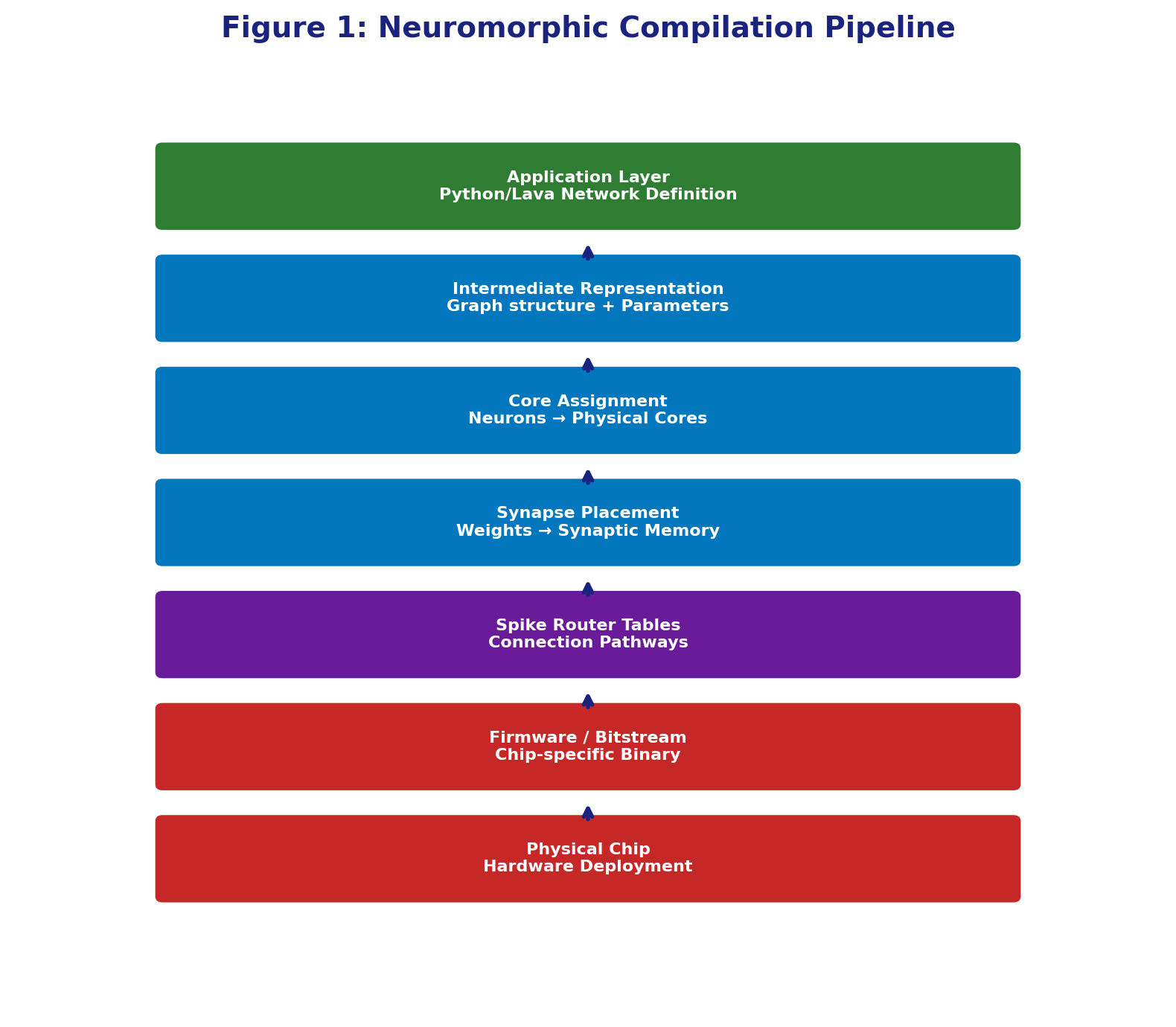
Neuromorphic computing obliterates these boundaries. Designing spiking neural networks transcends code authorship — it constitutes physical structure definition destined for silicon embodiment. Neuromorphic compilers assign neurons to physical processing cores, map synapses to dedicated memory cells, and route spike connections through physical interconnect fabrics.
Neuromorphic Compilation Workflow
Comprehending the compilation workflow proves essential for identifying verification targets and potential defect locations:
Individual Device Profiling
Unlike conventional digital processors exhibiting consistent chip-to-chip behavior, neuromorphic devices manifest manufacturing variations. Individual physical chips possess subtly distinct characteristics — particularly pronounced in analog implementations like BrainScaleS.
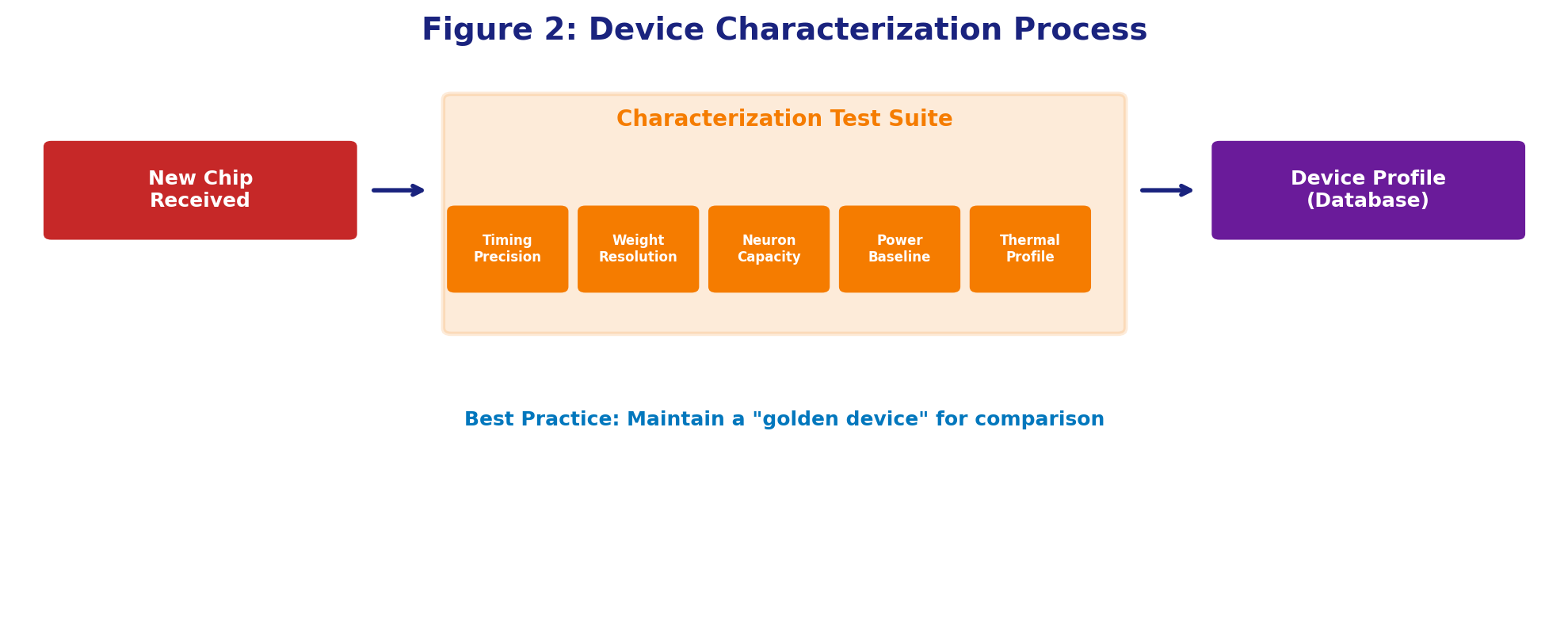
Temporal Precision Assessment: Configure neurons for precise interval firing, measure actual discharge timing. Compute temporal jitter (timing variance standard deviation). Specifications typically mandate < 100 nanosecond jitter.
Threshold Uniformity Analysis: Quantify actual activation thresholds across neurons spanning different processing cores. Coefficient of variation should remain < 5%.
Distributed Multi-Chip System Validation
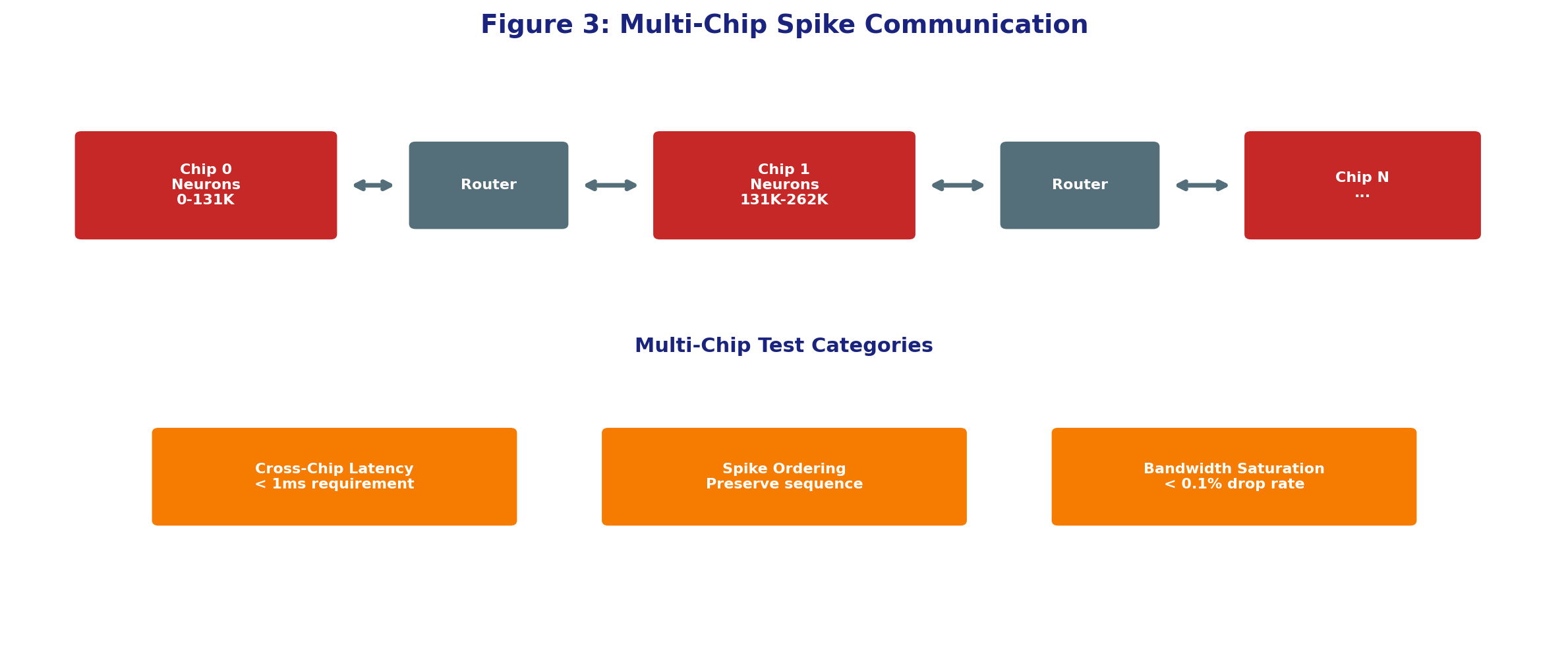
Enterprise-scale neuromorphic deployments like Intel’s Hala Point aggregate numerous chips (1,152 Loihi 2 processors in Hala Point) into unified computational fabrics. This architecture introduces supplementary verification challenges surrounding inter-chip communication infrastructure.
Resource Constraint Verification
Conclusion
Bridging the Silicon-Software Divide
Hardware integration testing represents the frontier where neuromorphic QA most dramatically departs from conventional practice. When your neural network physically manifests in silicon — with neurons mapped to specific cores, synapses allocated to dedicated memory cells, and spike pathways routed through physical interconnects — testing transcends software verification.
The methodologies presented here — compilation pipeline validation, device characterization, and multi-chip coordination testing — address challenges that simply don’t exist in traditional computing. Organizations investing in these competencies today position themselves strategically for the neuromorphic era.