Visibility got the supply chain this far. Orchestration is what comes next.
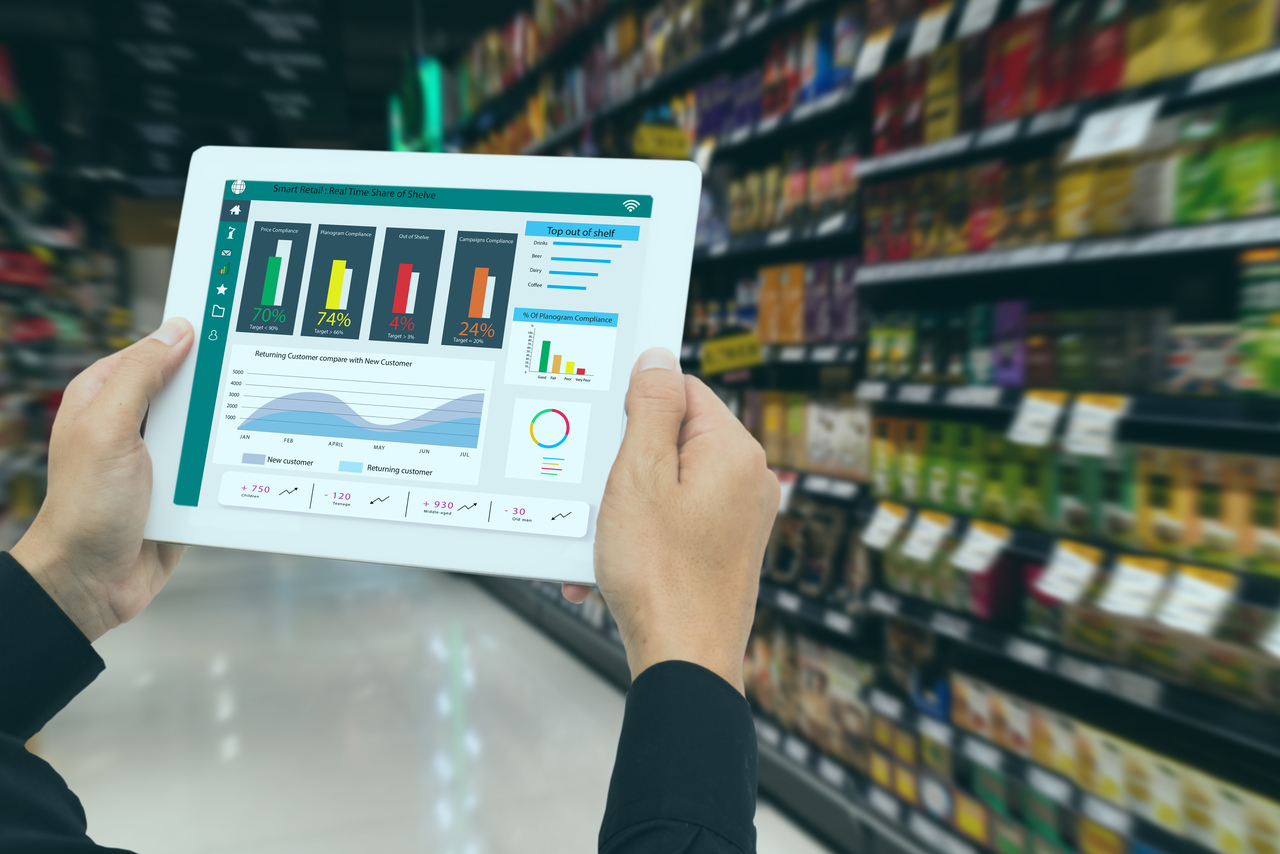
For a decade, supply chain leaders chased visibility as the goal. The logic was sound: see inventory, shipments, supplier performance, and demand in real time, and better decisions would follow. Enterprises poured billions into dashboards and control towers to secure that single, authoritative view.
It worked, but only narrowly. Most large enterprises can now see more of their supply chain than at any point in history — and yet disruption after disruption exposes the same gap: not in what they can see, but in what they can do about it. The hard problem has moved. It is no longer detecting that a shipment is late; it is deciding how to respond and executing that response across a tangle of systems, partners, and functions. Visibility has become the price of entry. Advantage now belongs to control towers that orchestrate action, not merely observe it.
The Visibility Paradox
Modern supply chains generate more data than any team can consume. The constraint is no longer information — it is connecting that information fast enough to act as one. Watch a single event travel through the enterprise: a delayed shipment creates an inventory shortfall, which disrupts production, which threatens a customer commitment, which distorts the forecast. Each consequence lands in a different function and system, noticed hours apart. By the time the full picture assembles, the window to respond cheaply has closed. Seeing a problem clearly is not the same as being able to resolve it.
From Monitoring to Orchestration
Most control towers were built to monitor. They answer what happened, where, and when — valuable, but backward-looking. Today’s disruptions demand harder questions: What is the impact? What are the options? What should be done, and how much of it automatically?
A connected control tower answers those. It behaves less like a dashboard and more like a digital nervous system, linking ERP, planning, manufacturing, logistics, suppliers, and service into a shared context — so an event is understood not in isolation but three steps downstream. Take a supplier disruption. A traditional tower alerts the team and leaves the response to people working sequentially across systems. A connected one assesses the downstream impact, identifies the exposed customers, evaluates alternate sourcing, models the reallocation and its trade-offs, and routes it for approval. The goal shifts from notifying stakeholders to orchestrating outcomes.
Visibility has become the price of entry. Advantage now belongs to those who can orchestrate action.
Where AI Changes the Equation
AI is what makes orchestration at this scale realistic. Machine learning surfaces patterns humans miss; predictive models flag risk before it materializes; generative AI turns raw exceptions into scenarios a leader can actually reason about. Agentic AI goes furthest: rather than only recommending, agents coordinate workflows, pull information from multiple systems, and execute defined tasks within governance guardrails. Faced with a supplier delay, an agent can confirm the shortfall, check qualified alternates, draft a reallocation, and present a decision to confirm rather than a problem to investigate.
But an agent is only as capable as the systems and data it can reach. Point AI at a fragmented, poorly governed landscape and it becomes another stranded tool; give it clean, connected access and it becomes a force multiplier. AI does not remove the integration challenge — it raises the return on solving it.
The Bottom Line
None of this arrives by installing software. It depends on trustworthy, governed data, on hard integration, and on the willingness to let automation act within clear limits. The organizations that succeed start small — one category, one lane, one recurring disruption — prove that orchestration is safe and effective and expand from earned trust. The technology is increasingly ready; the readiness that matters are organizational.
Supply chains are no longer chains but dynamic networks, and in that world seeing clearly is necessary but no longer sufficient. The future of supply chain resilience will not belong to whoever sees disruption first. It will belong to whoever responds fastest, smartest, and most decisively.